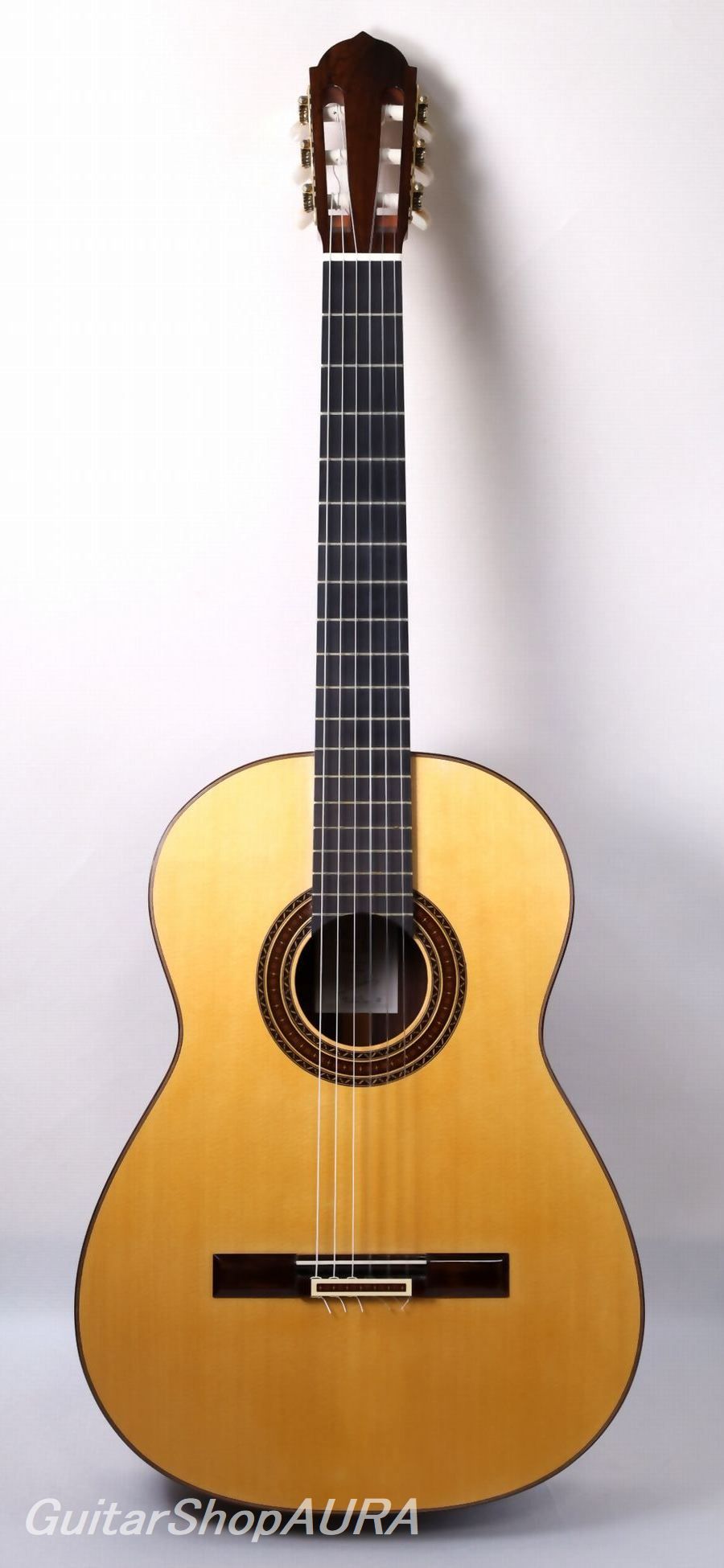
| Instrument | Koji Iuchi |
| Category | Japanese Classical Guitars 〔Used〕 |
| Number/Model | No.37 |
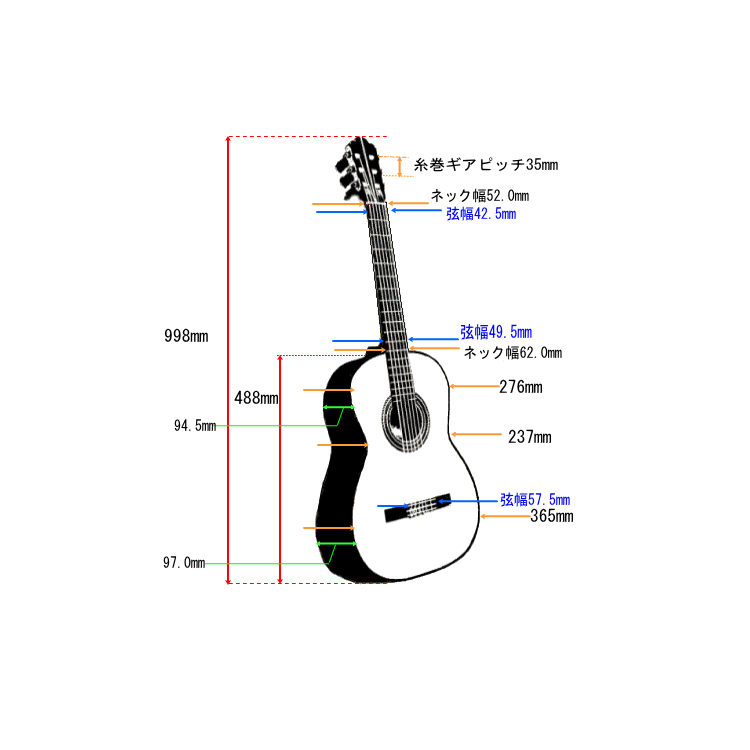
| Scale length | 650mm |
| Country | Japan |
| Year | 2012Year |
| Top | Solid Spruce |
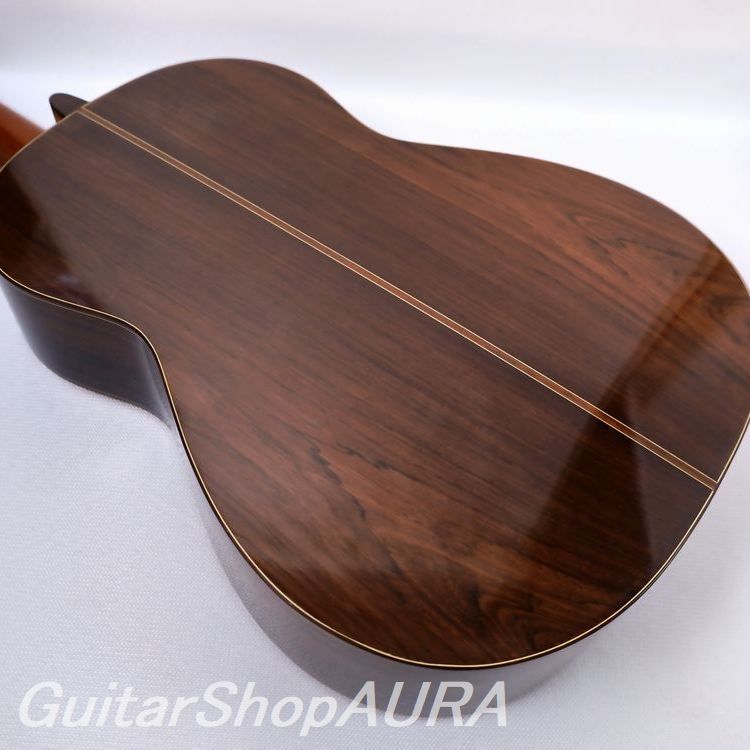
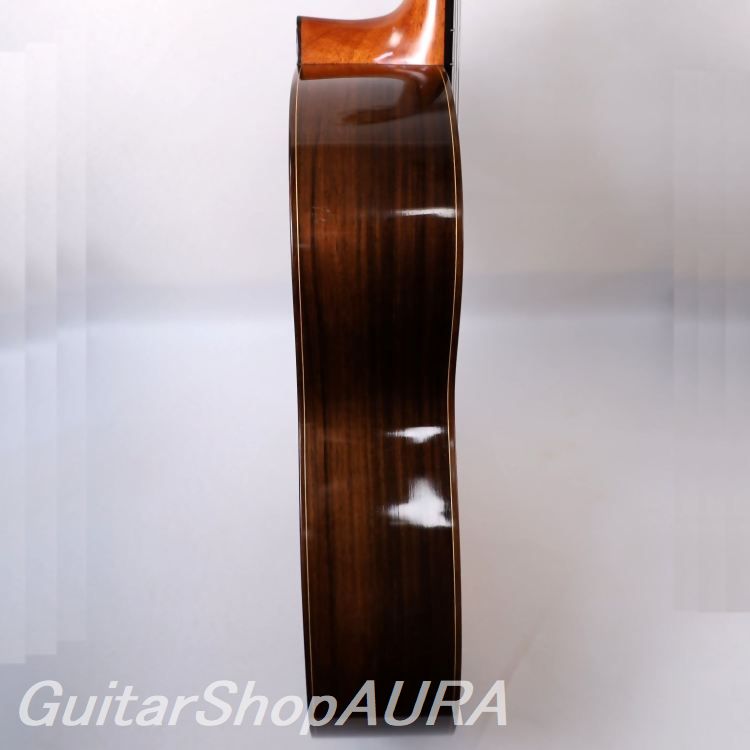
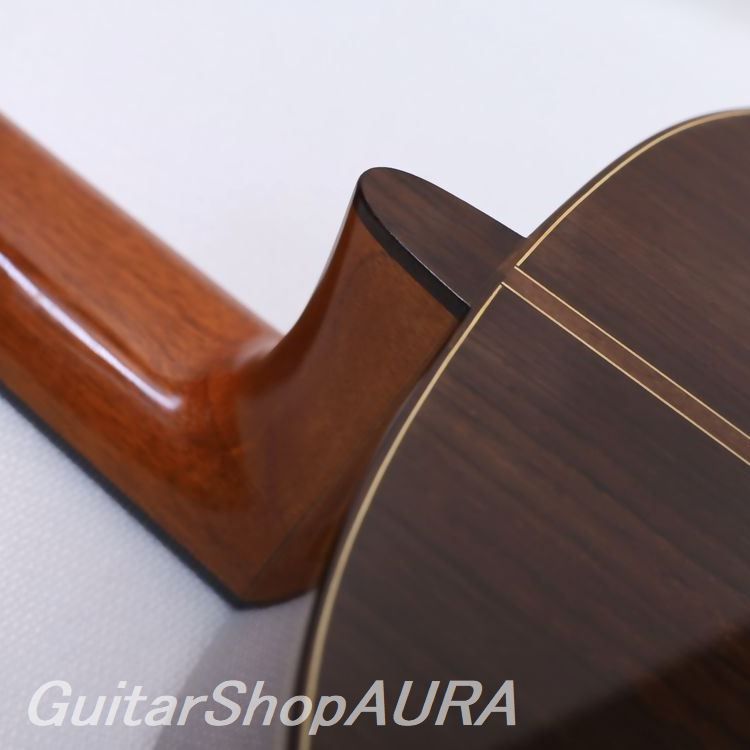
| Side&Back | Solid South American Rosewood |
| Condition※ | 7 |
| List price | INQUIRE |
| Price (tax included) | Please Inquire |
| option | with Hardcase(Gewa) |
Click to enlarge the photos below
|
|
 |
 |
 |
 |
 |
 |
 |
 |
 |


Neck:Mahogany
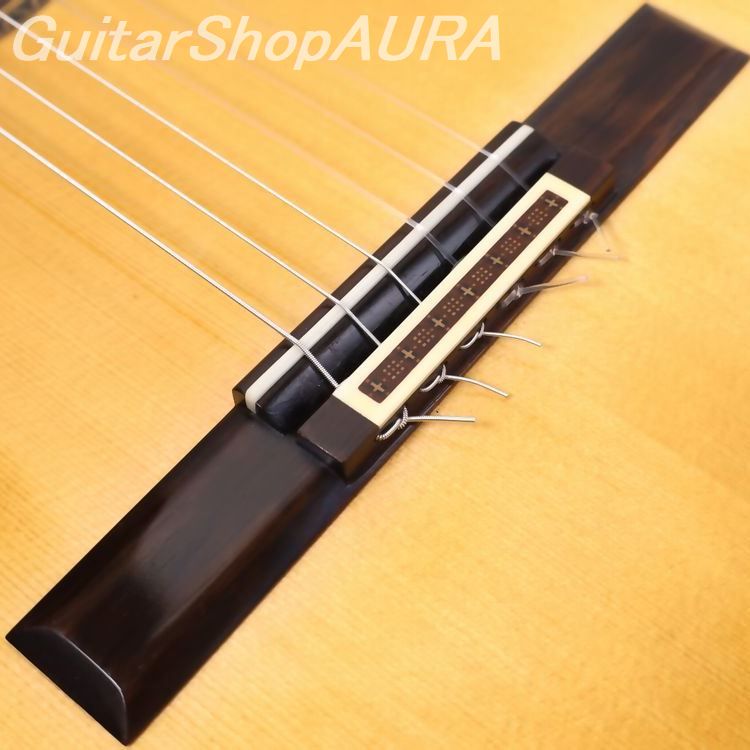
Fingerboard:Ebony
Finish(Top):Shellac
Finish(Back & Sides):Shellac
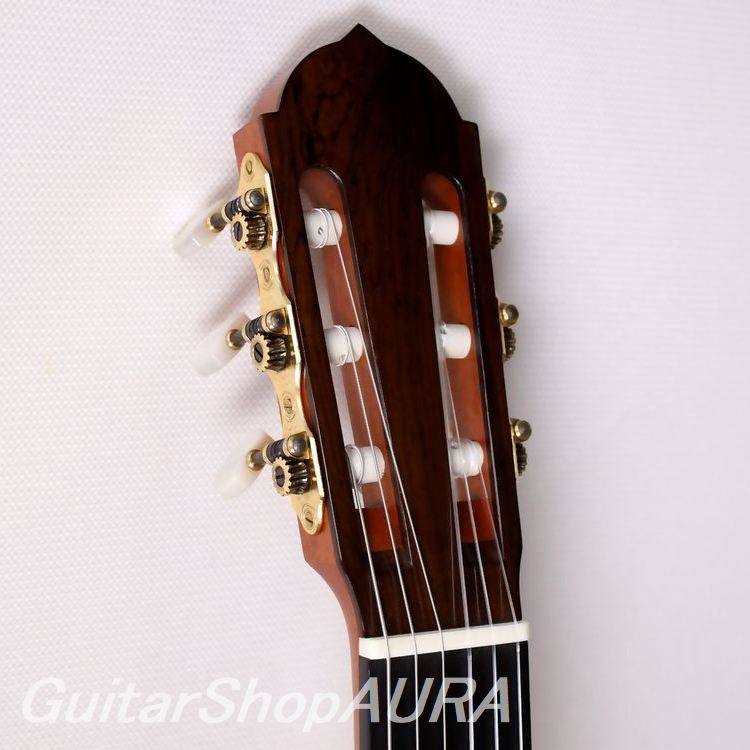
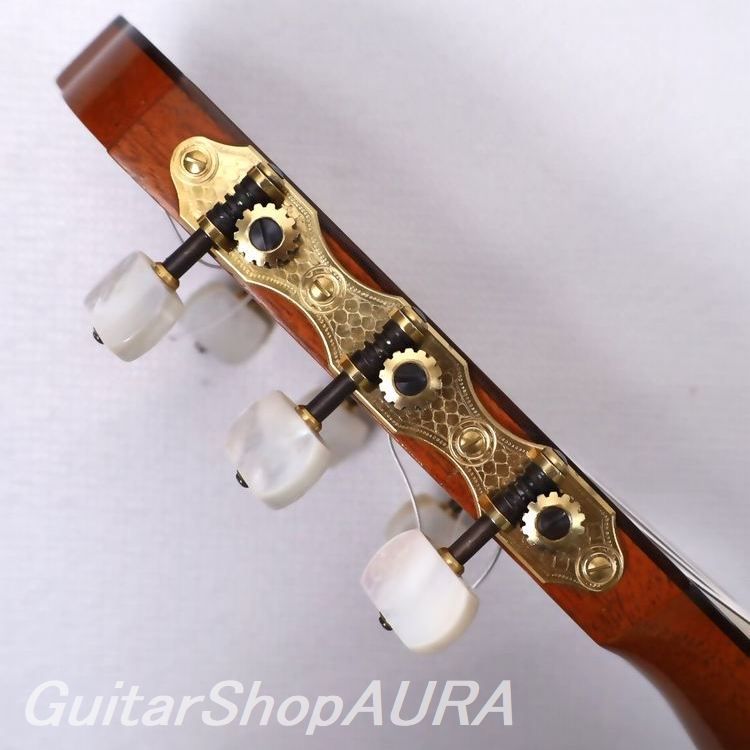
Tuning Machines:REISCHEL
String Height(1st):2.5mm
String Height(6th):3.5mm
Luthier Information
Koji Iuchi (born 1946)
Japanese luthier based in Tokushima Prefecture.
Koji Iuchi was originally an accomplished guitarist, but due to an injury to his fingers, he turned his focus to guitar making in 1996. His exceptional aptitude for craftsmanship quickly became evident, and in 2010 he won first prize at a domestic guitar-making competition organized by Gendai Guitar, firmly establishing his reputation as a professional luthier.
His instruments are highly regarded in Japan for their refined and meticulous workmanship, elegant aesthetics with careful attention to detail, and—most notably—their well-judged acoustic balance and natural musical expression. These qualities place his work among the most respected domestic handmade guitars. In recent years, his instruments have gained further recognition through use by prominent guitarists such as Shinichiro Tokunaga, making Iuchi a popular choice among younger players as well.
Instrument Description
This is a Koji Iuchi classical guitar, built in 2012, Serial No. 27, offered here as a used instrument.
Although the guitar was made when the maker was approaching 70 years of age, it represents a period when Iuchi—having begun his luthiery career at 50—was reaching a particularly mature stage in both technical mastery and conceptual depth. The high level of external craftsmanship, including design precision, was already well established by this time. Of particular interest in this instrument, however, is the innovative internal bracing design and its resulting tonal characteristics.
Internal Structure (Bracing)
The top bracing is highly distinctive and thoughtfully executed:
Two harmonic bars of differing heights are installed above the soundhole (neck side), with the entire area between them reinforced by a single plate.
Below the soundhole (bridge side), one harmonic bar is installed, accompanied by a diagonally placed treble bar extending from slightly bass-side of center toward the treble-side rib.
Around the soundhole, a rectangular reinforcing plate—covering a wider area than the rosette itself—is applied. On each side of this plate, two short braces are installed diagonally, aligned with the curvature of the adjacent sides.
In the lower bout, seven fan braces are arranged symmetrically (with the treble-side braces slightly shortened due to the treble bar). These are terminated at the bottom by two V-shaped closing bars.
Beneath the bridge, an extremely thin reinforcement plate (less than 1 mm thick) covers nearly the entire bridge area.
Most notably, a short transverse bar is placed approximately 2 cm above the bridge reinforcement plate, crossing the center line and positioned among the five bass-side fan braces. Three of these fan braces pass directly through this bar in a manner strongly reminiscent of Bouchet’s transverse bar construction, with the braces tightly interlocked into the bar.
Structurally, this design may be interpreted as a synthesis of Torres and Hauser traditions, infused with Madrid-style Spanish elements (such as Aguado influences) and further refined through ideas derived from French luthier Robert Bouchet. Crucially, these elements are not combined in a superficial or patchwork manner; instead, they form a coherent and well-balanced acoustic system, reflecting Iuchi’s refined tonal sensibility.
The main resonance is set slightly below G♯.
Sound Characteristics
The attack feels percussive and woody, as if the sound image springs vividly from deep within the body, accompanied by a natural echo that takes full advantage of the guitar’s internal air volume.
Treble notes are particularly strong and articulate. The bass does not dominate from below but instead supports the sound within the same tonal plane as the trebles, producing a balanced and integrated response. This characteristic recalls aspects of the Ramírez school, especially in its Madrid-style voicing. However, unlike the dense and sensual coloration often associated with Ramírez guitars, this instrument presents a brighter, fresher, and more transparent tonal character, clearly expressing Iuchi’s own musical identity.