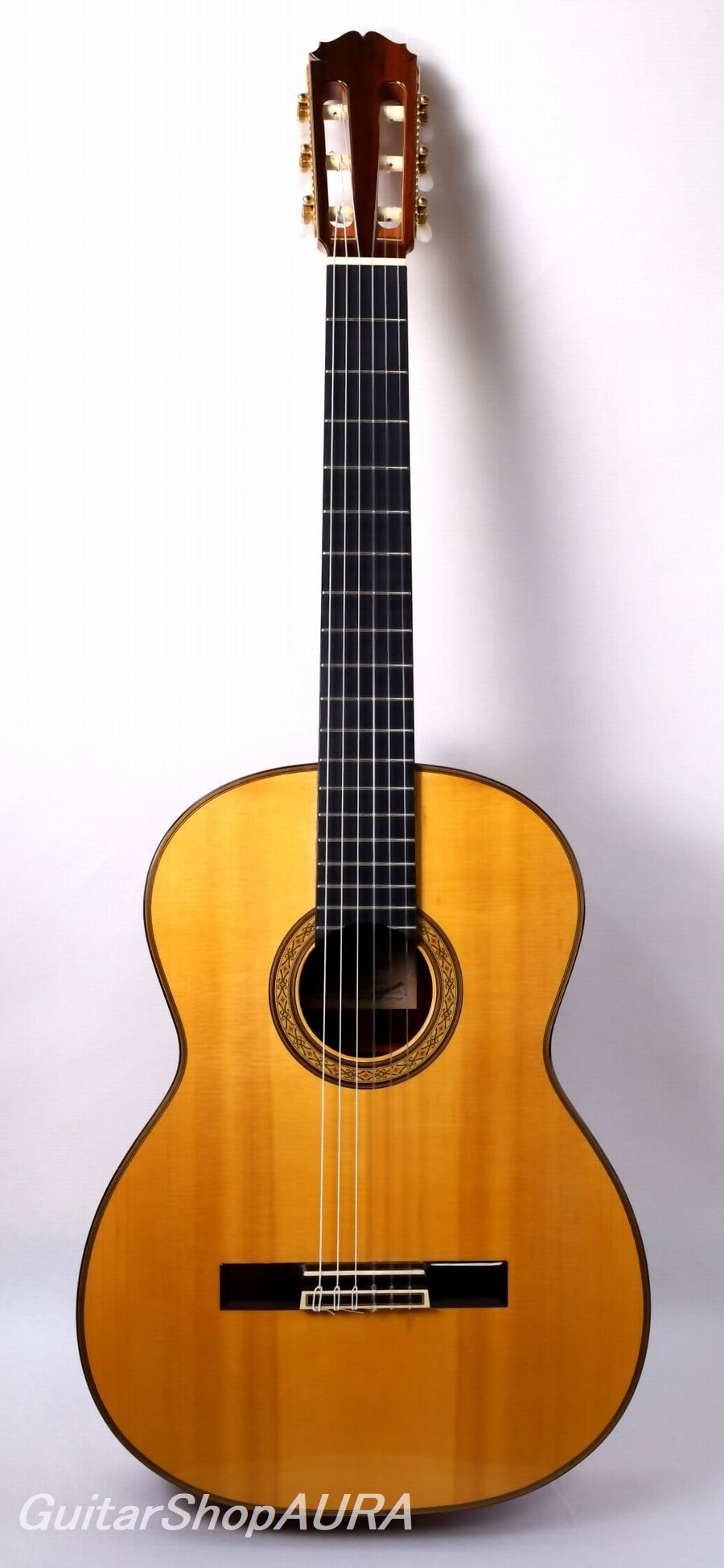
| Instrument | Masaru Kohno |
| Category | Japanese Classical Guitars 〔Vintage〕 |
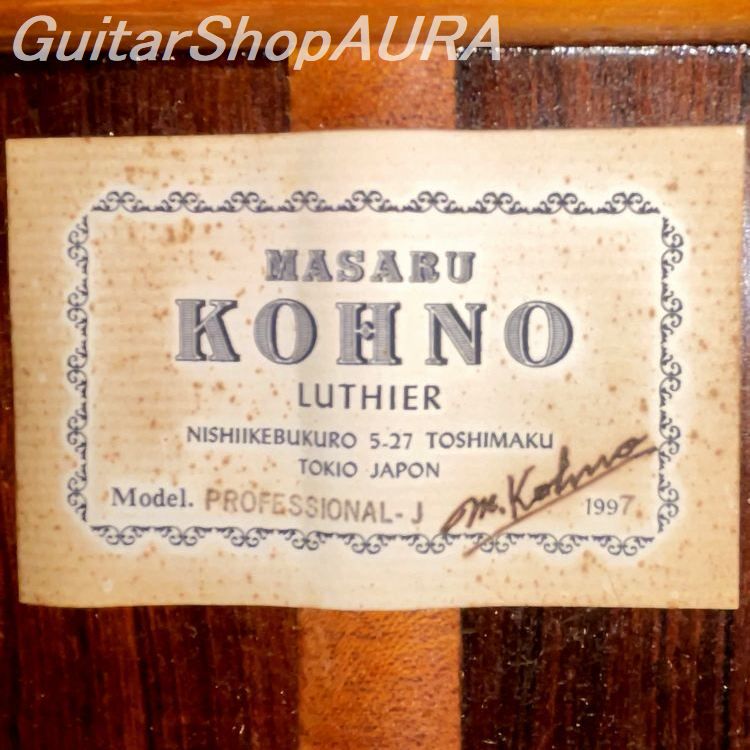
| Number/Model | Professional-J |
| Scale length | 650mm |
| Country | Japan |
| Year | 1997Year |
| Top | Solid Spruce |
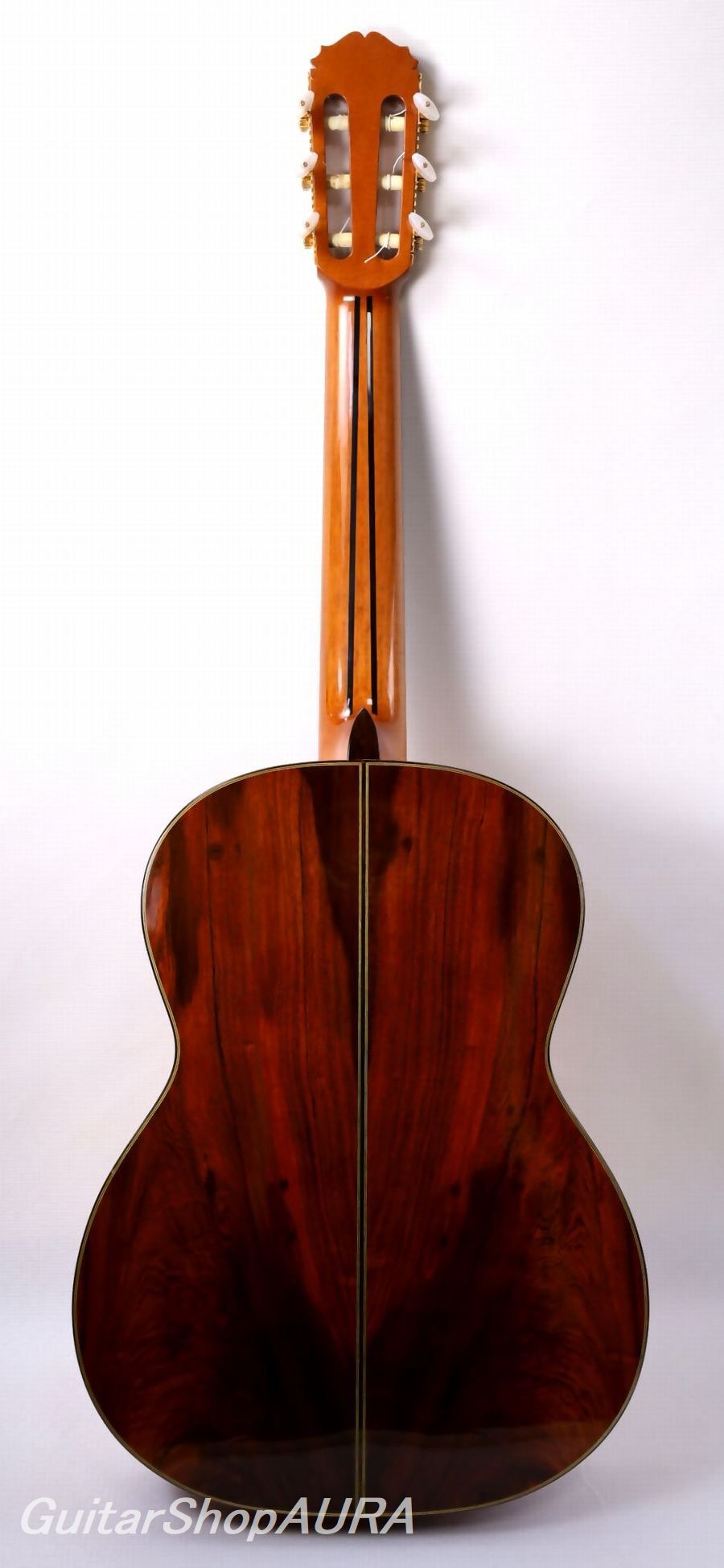
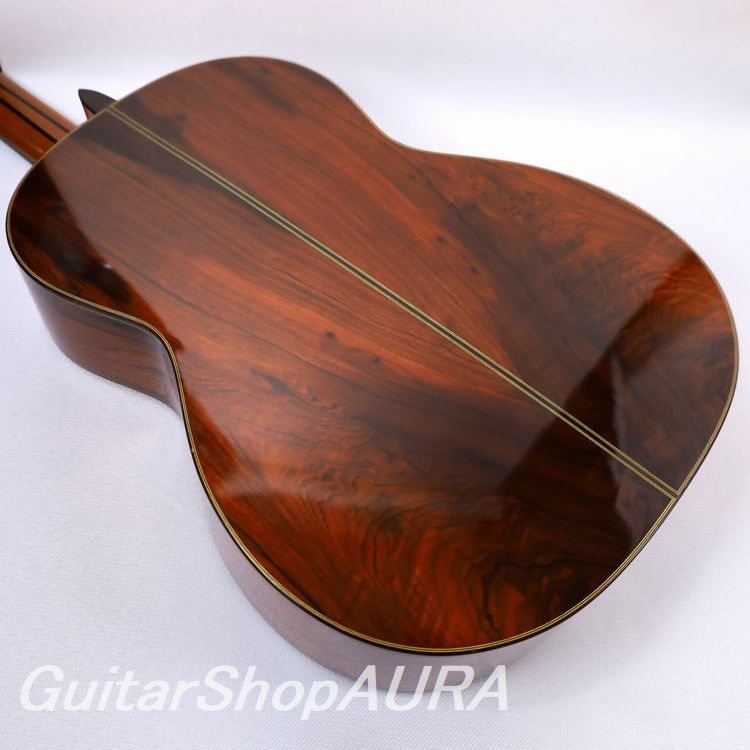
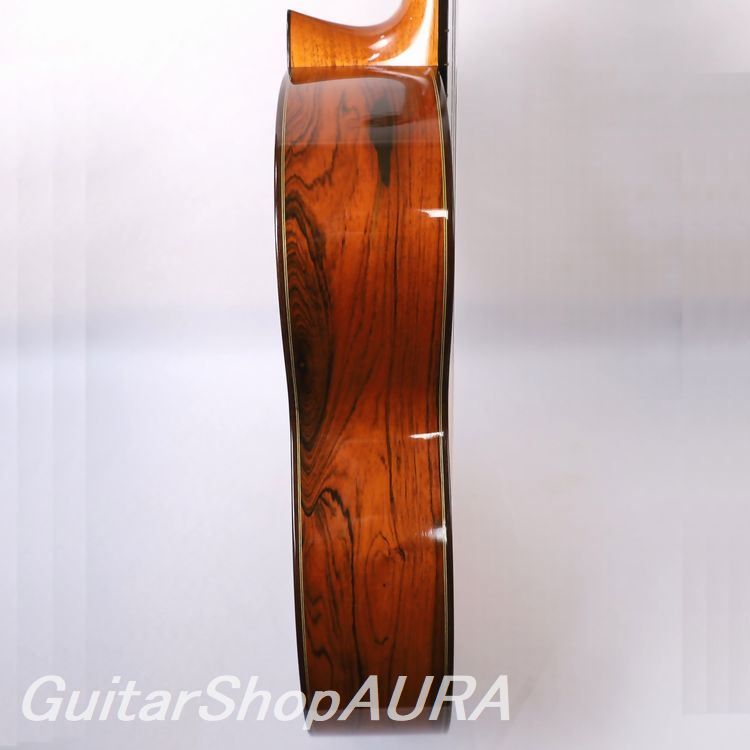
| Side&Back | Solid South American Rosewood |
| Condition※ | 7 |
| List price | INQUIRE |
| Price (tax included) | Please Inquire |
| option | with Light form case |
Click to enlarge the photos below
|
|
 |
 |
 |
 |
 |
 |
 |
 |
 |



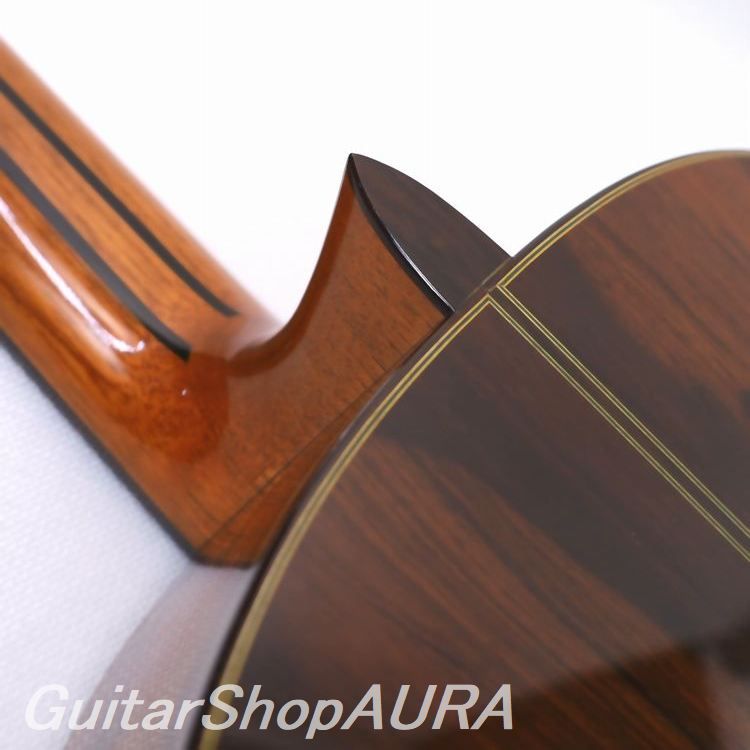
Neck:Cedro
Fingerboard:Ebony
Finish(Top):Cashew
Finish(Back & Sides):Cashew
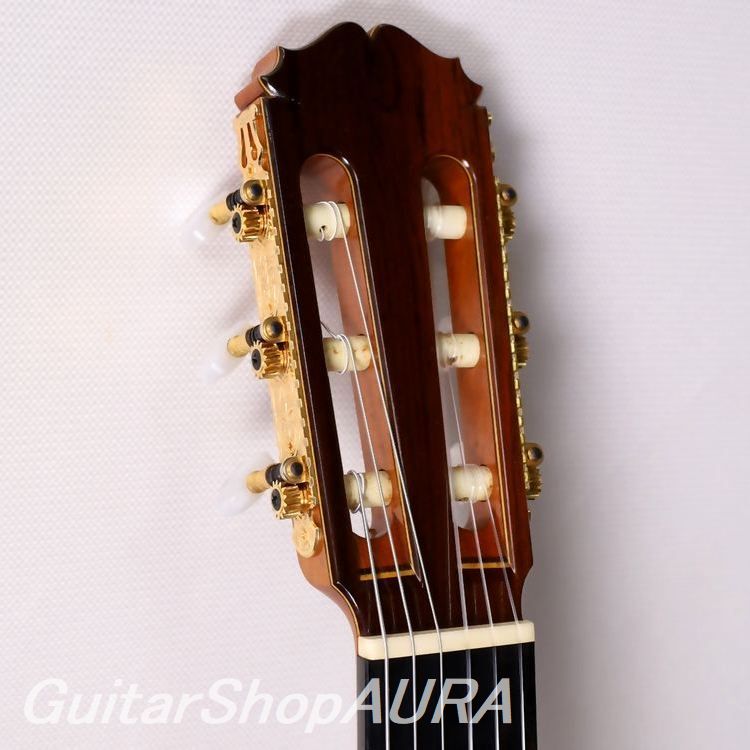
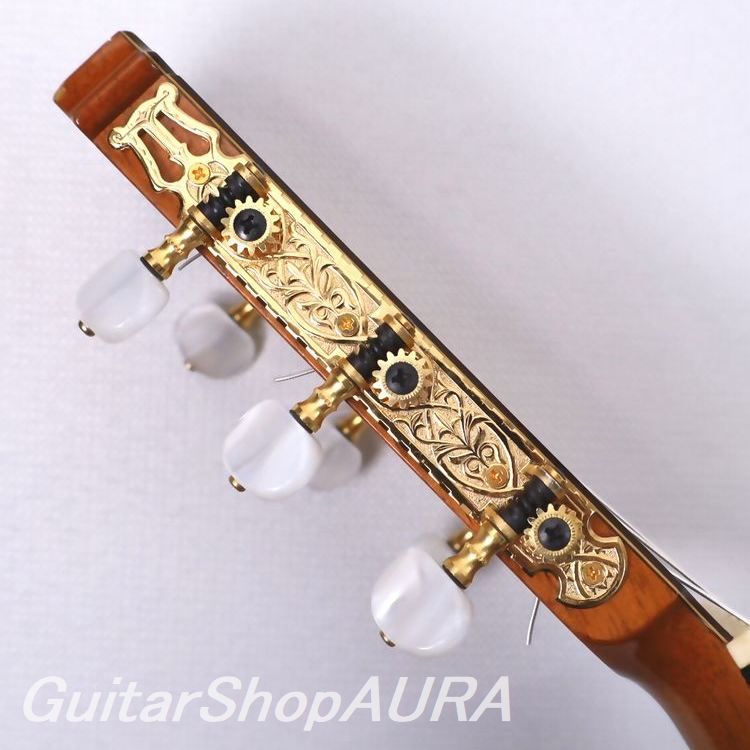
Tuning Machines:GOTOH
String Height(1st):3.0mm
String Height(6th):4.5mm
Maker Profile
Masaru Kohno (1926–1998) was born in Mito, Ibaraki, Japan. After graduating from the Department of Woodcraft at the Tokyo Higher School of Arts and Crafts (now Chiba University) in 1948, he began building classical guitars. Entirely self-taught as a luthier, his earliest instrument was based on a careful study of a guitar by Sakazo Nakade, although the two never worked together. From the outset, Kohno pursued original structural ideas, introducing innovative concepts uncommon for the period.
His extensive experimentation eventually culminated in the late 1960s in his signature bracing system, characterized by a series of square-shaped structural sections formed by longitudinal fan braces and multiple transverse bars. This design, refined over the years in several variations, remains one of the defining characteristics of the Kohno workshop.
In 1960 Kohno traveled to Spain, where visits to the workshops of Ignacio Fleta and Arcángel Fernández deepened his understanding of the Spanish tradition and strongly influenced his own approach to guitar making. International recognition followed in 1967 when he won the Gold Medal at the Liège International Guitar Making Competition in Belgium. That same year his nephew, Masaki Sakurai, joined the workshop. Following Kohno's passing in 1998, Sakurai inherited the workshop and has continued its legacy under the Sakurai-Kohno name.
Masaru Kohno is widely regarded as one of the pioneers of high-end Japanese classical guitar making. His instruments successfully reinterpret the Spanish tradition through a distinctly Japanese perspective, combining refined tonal balance, exceptional playability, and carefully selected tonewoods with meticulous craftsmanship. Their popularity transformed the domestic market for concert classical guitars, while the Kohno name continues to enjoy an outstanding international reputation today.
Instrument
This is a 1997 Masaru Kohno Professional-J (Serial No. IA1105), built during the master's final years. By this period the Kohno workshop had already established a highly organized production system, and although the Professional-J occupied the entry position beneath the flagship Maestro model, the instrument clearly reflects Kohno's design philosophy and exacting quality standards. After his passing, Masaki Sakurai continued production of this model under the Sakurai-Kohno label, further refining the designs through his highly analytical approach. Many players, however, continue to appreciate the distinctive warmth and natural musicality that remained characteristic of Kohno's own work.
The Professional-J features Kohno's distinctive bracing design. A single harmonic bar is positioned above the soundhole, while two are located below, each differing in height and profile. The lower bout incorporates seven nearly parallel braces rather than a conventional fan arrangement. A full-width bridge reinforcement plate is complemented by additional short transverse bars above and below the bridge area, while a single closing bar spans the lower bout, creating a series of square structural sections that distribute vibration efficiently across the soundboard. Visually, the layout forms a geometric, almost architectural pattern centered around the bridge, reflecting both structural sophistication and an understated Japanese aesthetic. The main body resonance lies between F# and G. This internal design is essentially identical to that of the Professional-R, the principal difference being the choice of back and side wood: the Professional-R employs Indian rosewood, whereas the Professional-J uses Central/South American rosewood.
Tonally, the guitar produces a smooth, controlled attack followed by a remarkably well-focused sound with generous body resonance. Its voice is warm, balanced, and naturally responsive, combining richness with clarity while maintaining excellent separation across the registers. Equally impressive is its effortless playability, making it suitable for a wide range of classical repertoire. The sound is refined and elegant without excessive weight, bright yet never harsh, displaying the consistently high tonal standard for which the Kohno workshop is renowned.
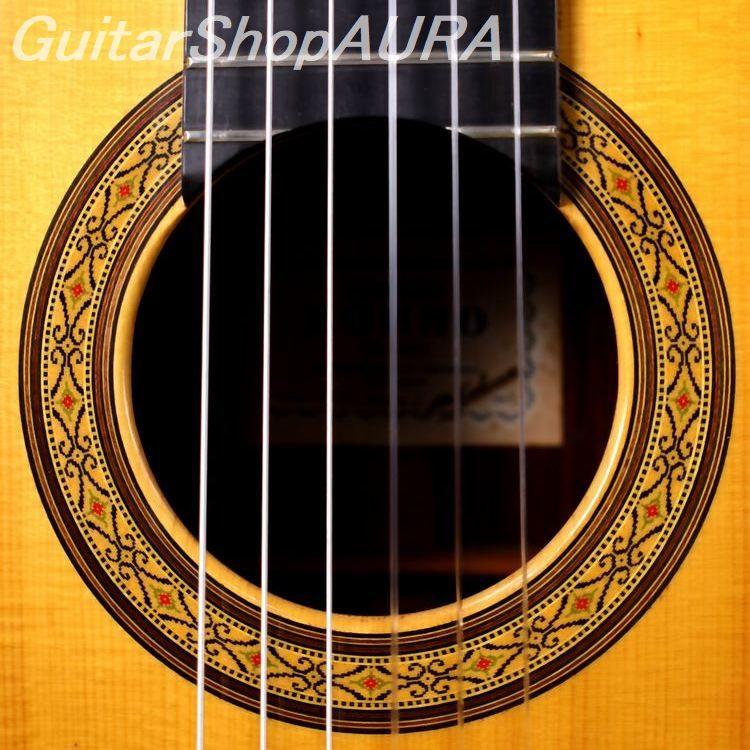
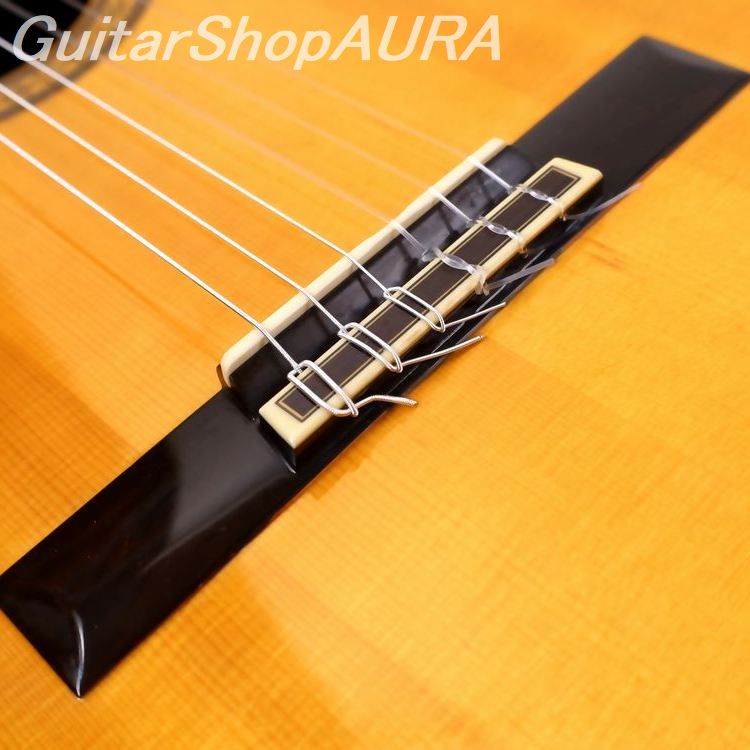
The instrument remains in very good original condition. There are no cracks, structural repairs, or modifications. Minor playing wear is present around the fingerboard edges, soundhole, and below the bridge (including a small string mark beneath the first string), but these are light and purely cosmetic. The back, sides, and neck show only minimal surface wear from normal handling. The neck, frets, and overall setup remain excellent. The neck has Kohno's characteristically slim D-shaped profile, providing exceptional comfort without resorting to an unusually small neck size. String action measures 3.0 mm (1st string) and 4.5 mm (6th string) at the 12th fret, with approximately 0.5–1.5 mm of saddle remaining. Although the numerical setup is standard to slightly high, the carefully calculated neck angle and moderate string tension result in a remarkably comfortable left-hand feel. The guitar is fitted with Gotoh tuning machines, functioning smoothly, and the original label bears Masaru Kohno's handwritten signature.