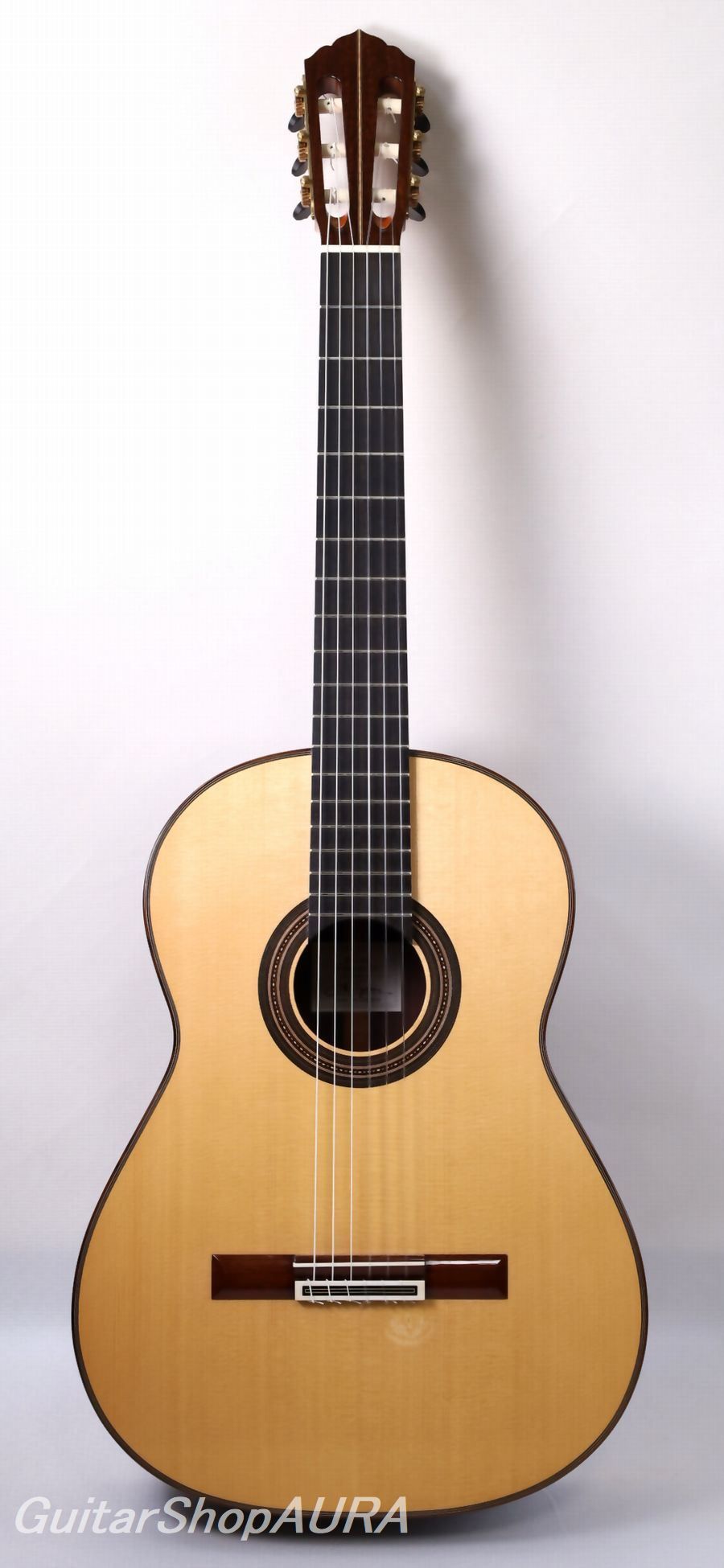
| Instrument | Walter Verreydt |
| Category | Imported Classical Guitars 〔Used〕 |
| Number/Model | Lattice |
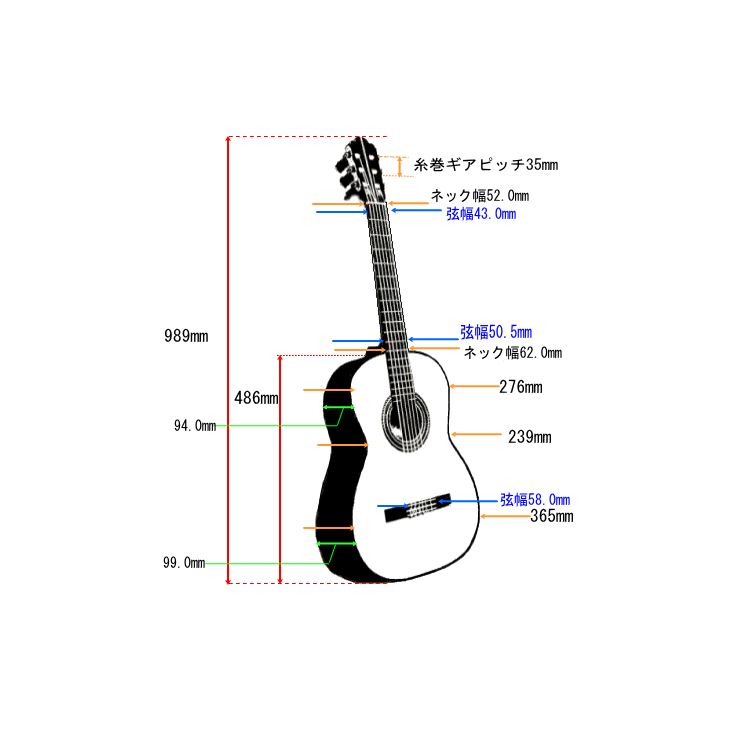
| Scale length | 650mm |
| Country | Belgium |
| Year | 2018Year |
| Top | Solid Spruce |
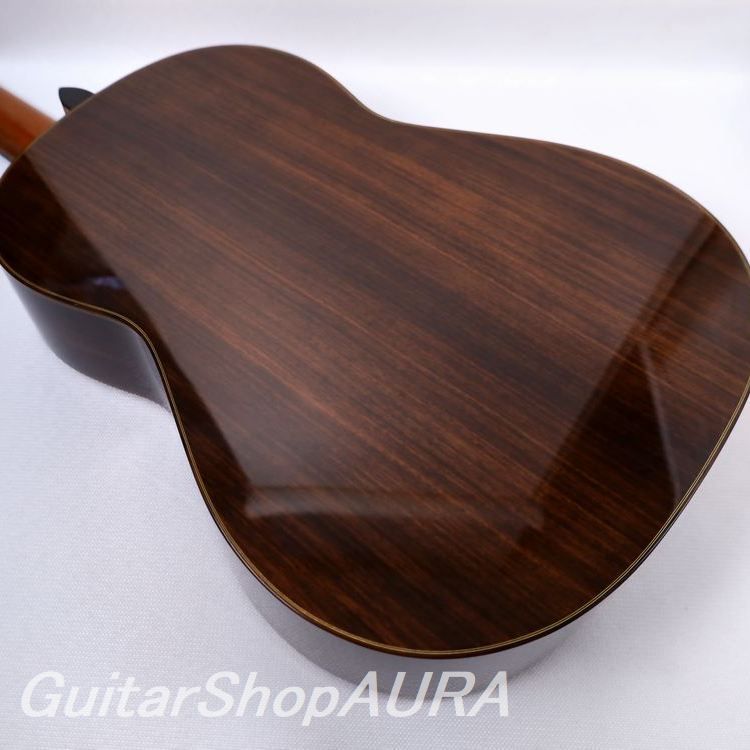
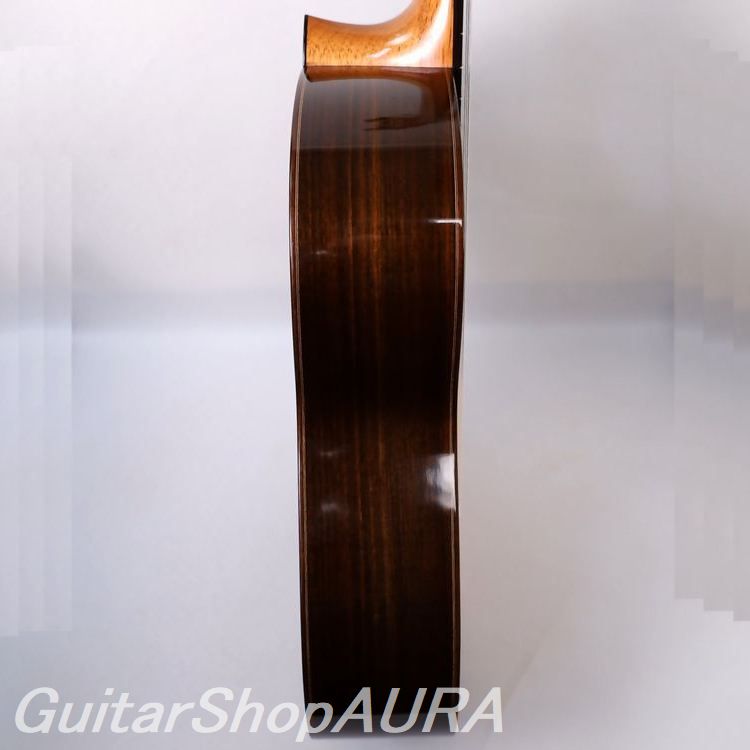
| Side&Back | Solid Indian Rosewood |
| Condition※ | 7 |
| List price | INQUIRE |
| Price (tax included) | Please Inquire |
| option | with Hardcase |
Click to enlarge the photos below
|
|
 |
 |
 |
 |
 |
 |
 |
 |
 |


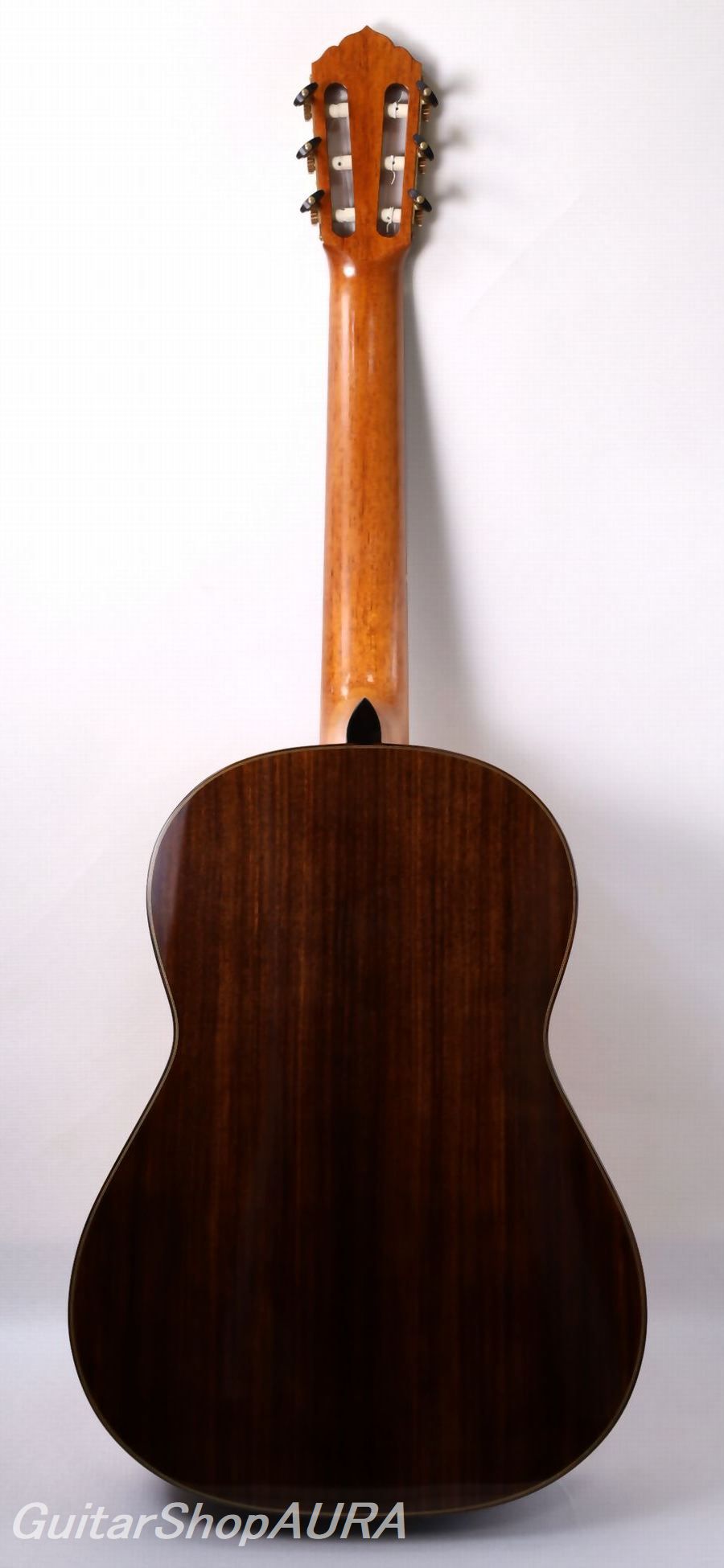
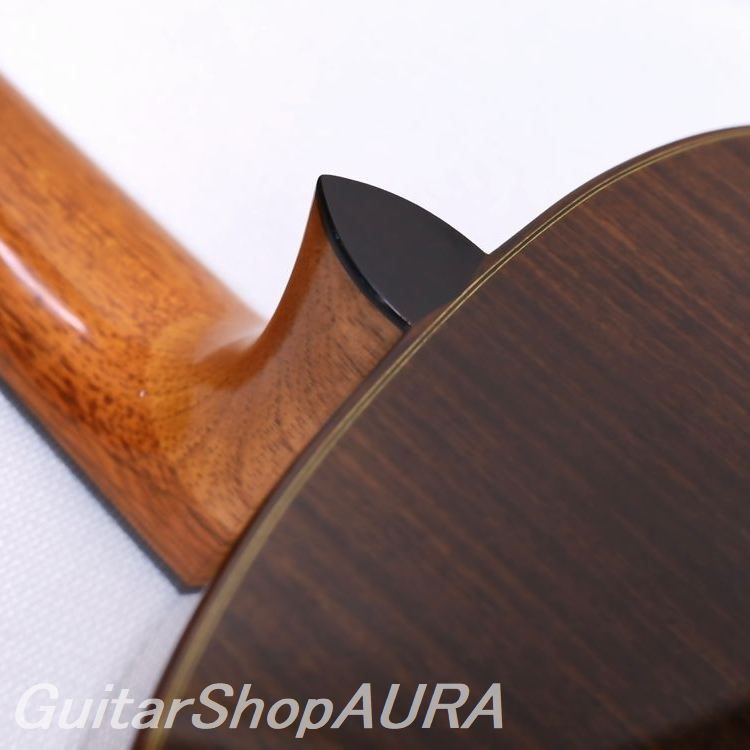
Neck:Cedro
Fingerboard:Ebony
Finish(Top):Shellac
Finish(Back & Sides):Shellac
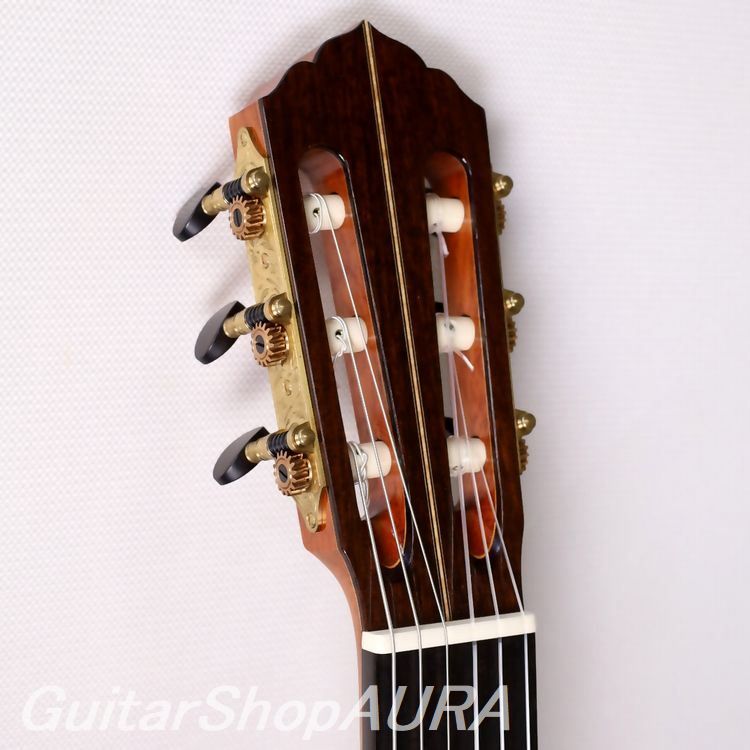
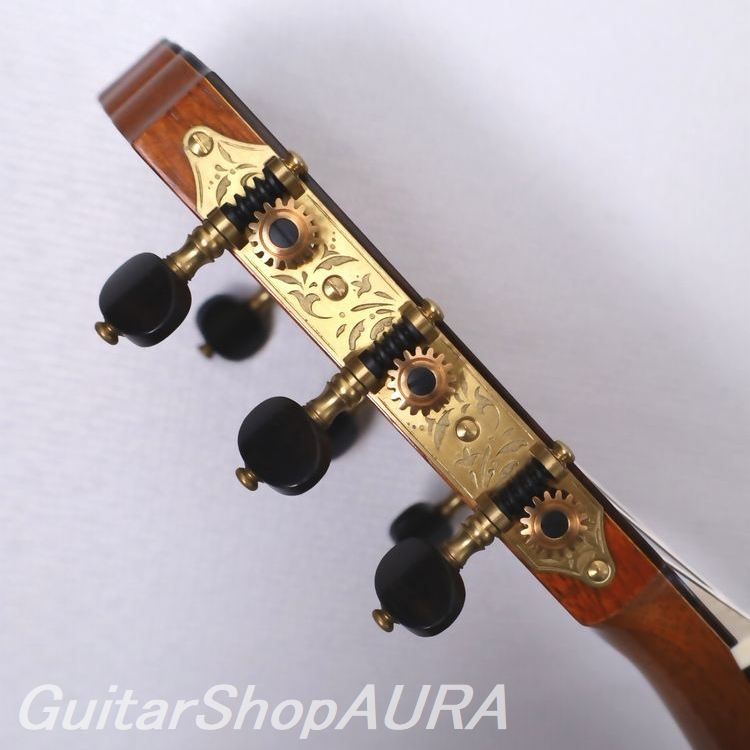
Tuning Machines:SCHELLER
String Height(1st):2.7mm
String Height(6th):3.4mm
[Luthier Information]
Walter Verreydt was born in 1958 in Lille, Belgium. He is widely regarded as one of the makers who helped establish the cultural foundation of classical guitar making in Belgium, and today he enjoys strong international recognition, particularly in Europe, as one of the country’s leading luthiers.
Born into a family that has produced many professional musicians in performance and composition, Verreydt himself has always maintained a deep love for music. At the same time, possessing outstanding skills in architecture, furniture making, and wood carving, he initially pursued a career as an educator in these woodworking fields. Eventually, the combination of his technical mastery and musical passion led him to guitar making, and in 1985 he built his first instrument.
Largely self-taught through hands-on examination of historic masterpieces by makers such as Bouchet and Fleta, he further refined his craft through exchanges with José Luis Romanillos and Daniel Friederich, as well as through his association with German luthier Rolf Eichinger, who was based in Granada. There, Verreydt deepened his understanding of traditional Spanish construction methods.
Thanks to his already high level of woodworking skill, his guitars were exceptional from an early stage. Since 1988, he has taught continuously at the instrument-making school (CMB) in Puurs, Antwerp Province, with the aim of educating younger generations and sharing his research成果. Notably, the distinguished Belgian luthier Karel Dedain studied under Verreydt at this institution.
In addition, driven by strong environmental awareness, Verreydt actively researches and applies sustainable tonewoods suitable for guitar making through his involvement in the Leonardo Guitar Research Project (LGRP). He currently builds his instruments in his workshop in Kessel, near Antwerp.
Verreydt’s guitars embody a successful fusion of deep respect for tradition with a flexible, modern outlook. They are characterized by clarity and definition, a rich palette of tonal colors, wide dynamic range, and quick responsiveness to changes in expression. These qualities have earned high praise as instruments fully capable of meeting the demands of today’s concert guitarists.
As a true woodworking specialist and an active researcher of tonewoods through LGRP, Verreydt is exceptionally discerning in his material selection. His focus is not on visual appeal alone, but rather on how well the wood resonates acoustically—an approach that further distinguishes this brand as one of remarkable insight and integrity.
[Instrument Information]
We are pleased to offer this beautifully preserved used guitar by Walter Verreydt, built in 2018, No. 249. This model features a lattice bracing structure on the soundboard and is regarded as one of the key pillars of his current lineup, alongside his more traditional fan-braced (Torres-inspired) models. It enjoys both strong popularity and critical acclaim.
When one thinks of lattice bracing, the Australian school—exemplified by Greg Smallman—often comes to mind, with its emphasis on great volume, rapid response, and tonal uniformity. While Verreydt acknowledges the functional excellence of these designs, which are often said to overcome many of the traditional “limitations” of the classical guitar, he also felt that they tended to lack the tonal “color” inherent to traditional instruments.
Prioritizing the guitar as an expressive musical instrument above all else, Verreydt adopted lattice bracing in his own way, creating a model that incorporates the functional advantages of a concert guitar without sacrificing overall tonal character. The result is a superb instrument that fully preserves the guitar’s identity as a tone-driven instrument.
Structurally, the soundboard bracing can be described as a hybrid: within an essentially traditional layout, only the fan-braced area has been replaced with a lattice structure. There are two harmonic bars above the soundhole (neck side) and one below (bridge side), slightly angled downward from bass to treble. Beneath this, nine plus nine braces cross each other at right angles to form a lattice that evenly covers the lower portion of the soundboard. These braces are delicately made, approximately 3 mm in width and height, and reinforced on top with carbon material.
The soundboard itself is worked to a conventional thickness of around 2 mm throughout, and the upper reinforcement follows orthodox methods. Unlike many Australian-style guitars—where the lower bout is thinned to extremes and heavily reinforced with massive pillars—the joint between the top and sides here employs traditional triangular wooden peones. In this way, the lattice concept is effectively integrated into a framework grounded in Spanish tradition. The main resonance is set slightly above G.
The guitar responds closely and comfortably to the player’s touch, offering a natural sense of drive typical of modern guitars. However, rather than emphasizing sheer power, Verreydt has successfully infused the instrument with elegance and restraint, producing a refined and beautiful tonal character. Its voice is gentle yet focused, dignified, and distinctly “gentlemanly”—a quality well suited to Western classical music.
Playability, one of Verreydt’s core priorities, is fully realized here. The neck features a relatively thin, softly contoured D-shape, compact in feel, with moderate string tension. This makes left-hand fingering easy, while the stress-free response of the soundboard allows the right hand to produce sound efficiently without unnecessary effort.
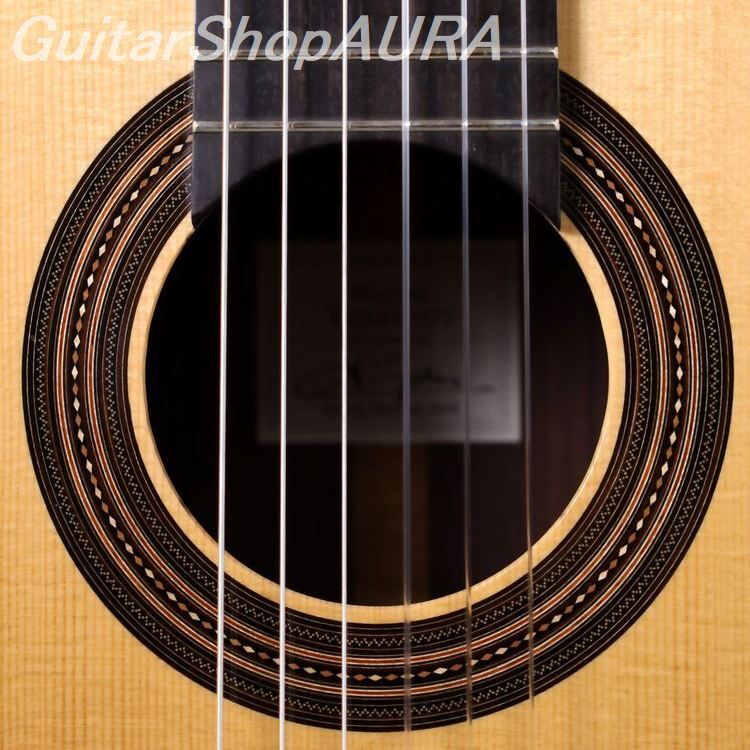
As expected from a brand so particular about material selection and visual refinement, the overall appearance is understated yet exceptionally elegant. The rosette deserves special mention: executed with extreme delicacy and precision in dark brown and beige tones, it significantly enhances the instrument’s sense of refinement.
Whereas many Australian-style lattice guitars exceed 2 kg due to their thick back and side construction, Verreydt’s guitar follows traditional thicknesses throughout and is finished in an exquisitely delicate shellac. As a result, the weight is a relatively light 1.50 kg.
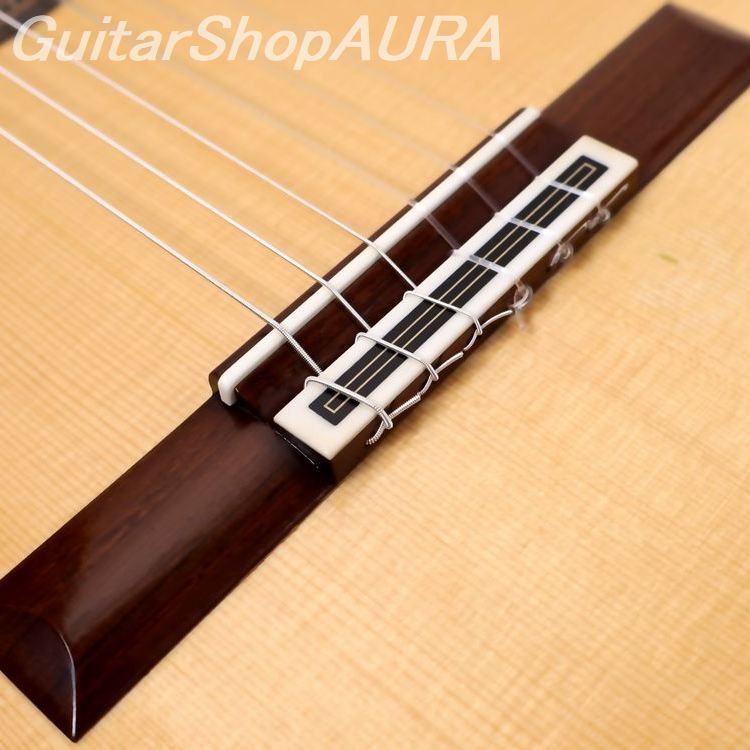
There are minor playing marks near the treble side of the soundhole and along the fingerboard edge on the top, as well as a repaired area beneath the first string behind the bridge where a string once slipped. Otherwise, the guitar remains in very clean condition. The neck shows only a very slight forward relief, with no negative impact on playability.
The current string height is 2.7 mm (1st string) and 3.4 mm (6th string) at the 12th fret, with approximately 1.0–1.5 mm of saddle remaining. The frets are in good condition and within proper tolerances. The guitar is fitted with high-end Scheller tuning machines from Germany, which are fully functional and smooth. A premium Viscount hard case is included.
An exceptional instrument that can be regarded as one of the ultimate modern-guitar solutions by a Belgian master luthier. A rare opportunity to acquire such a guitar on the used market.