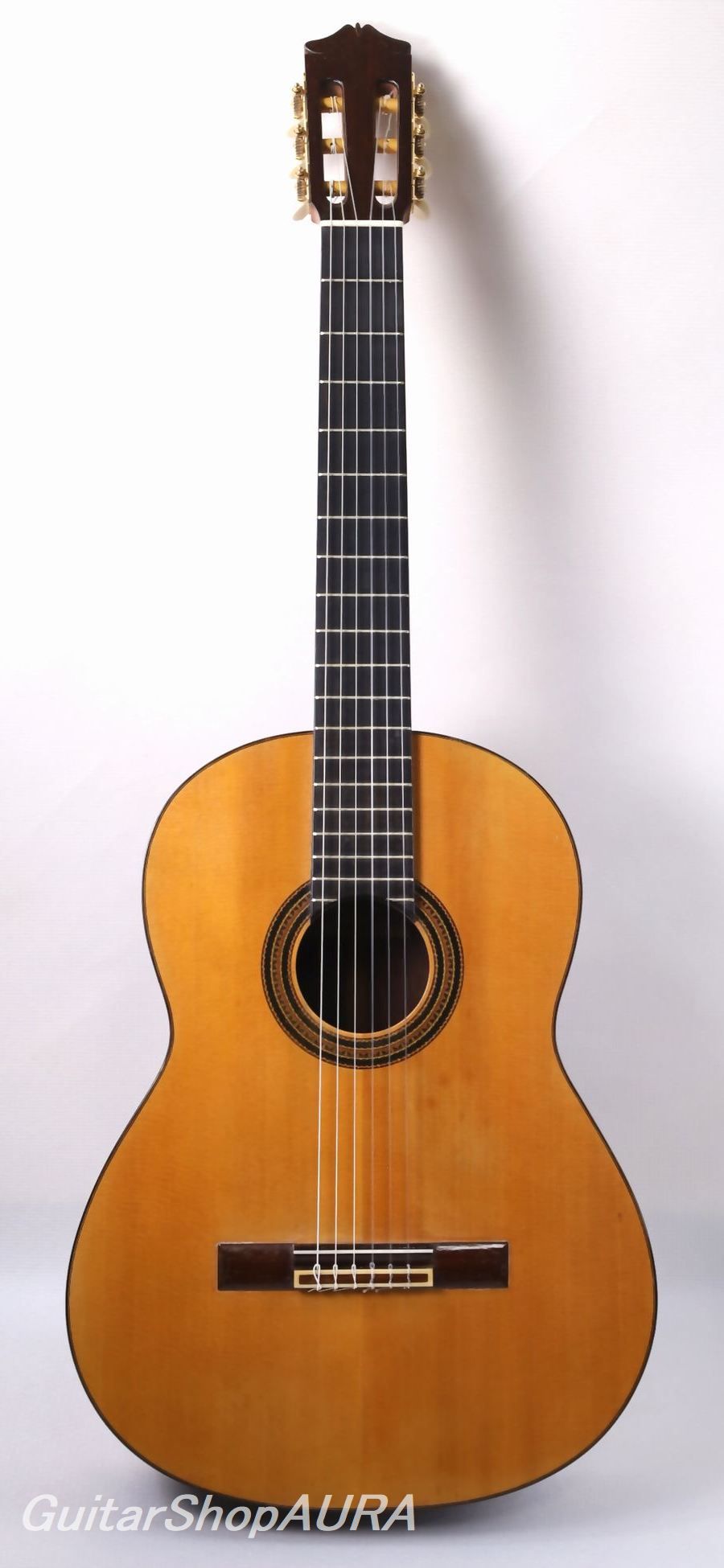
| Instrument | Viuda de Marcelo Barbero |
| Category | Imported Classical Guitars 〔Vintage〕 |
| Number/Model | |
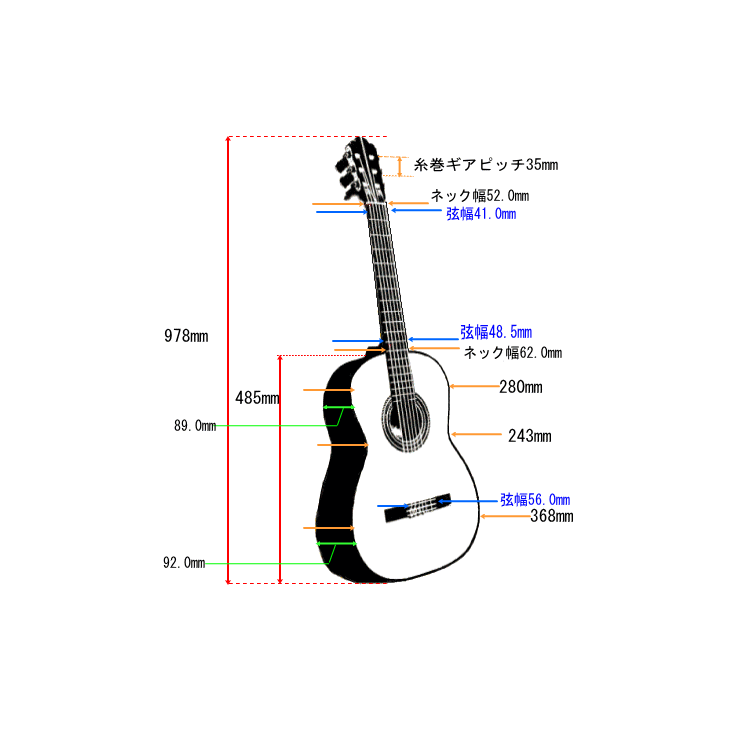
| Scale length | 650mm |
| Country | Spain |
| Year | 1956Year |
| Top | Solid Spruce |
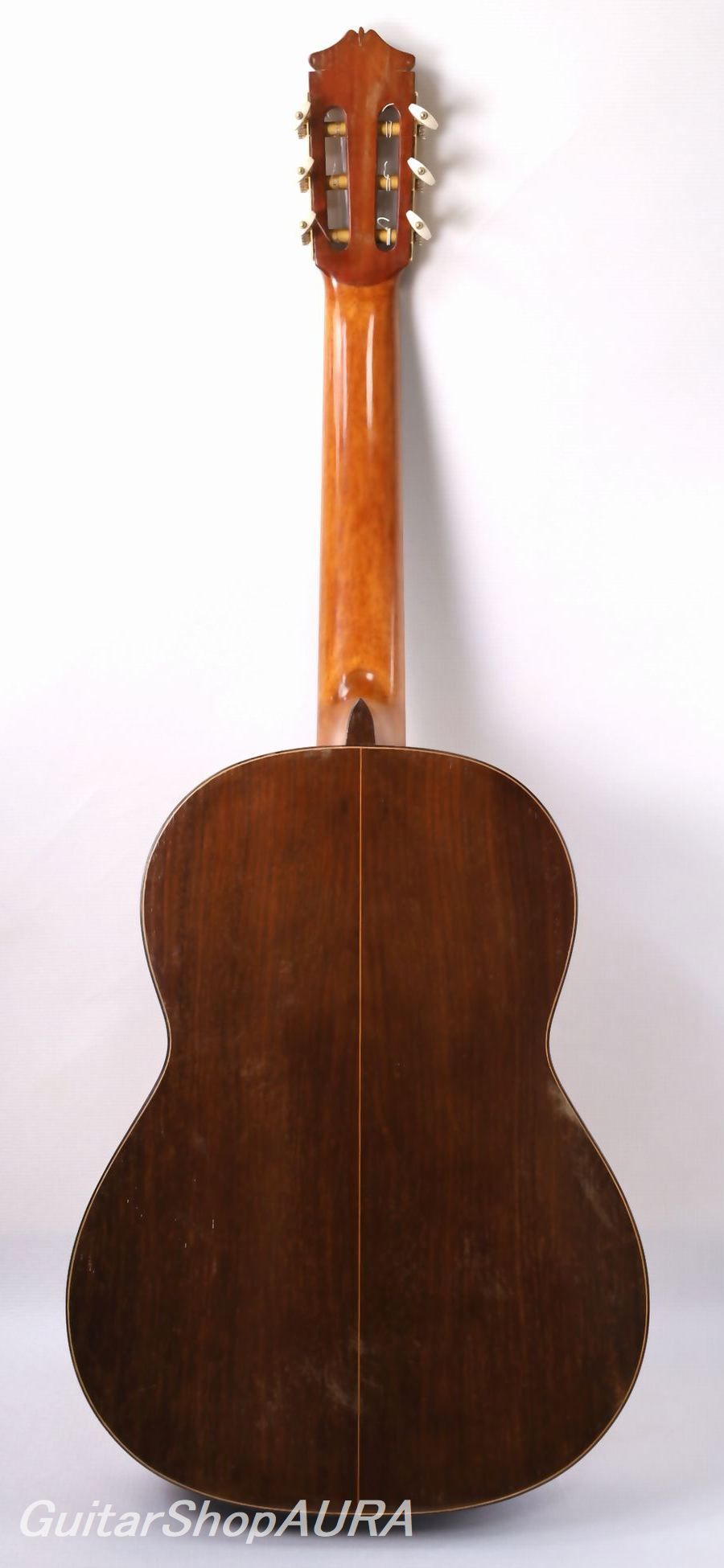
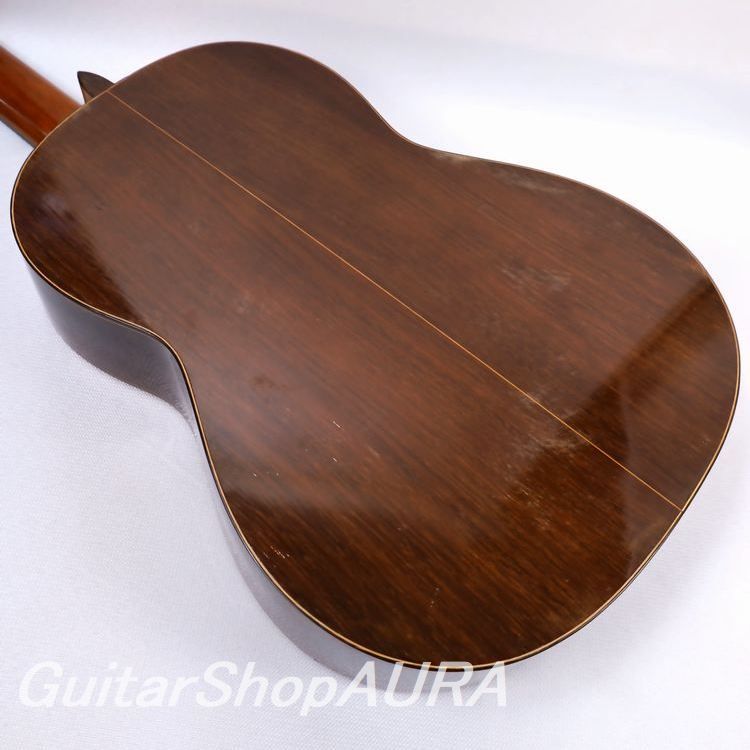
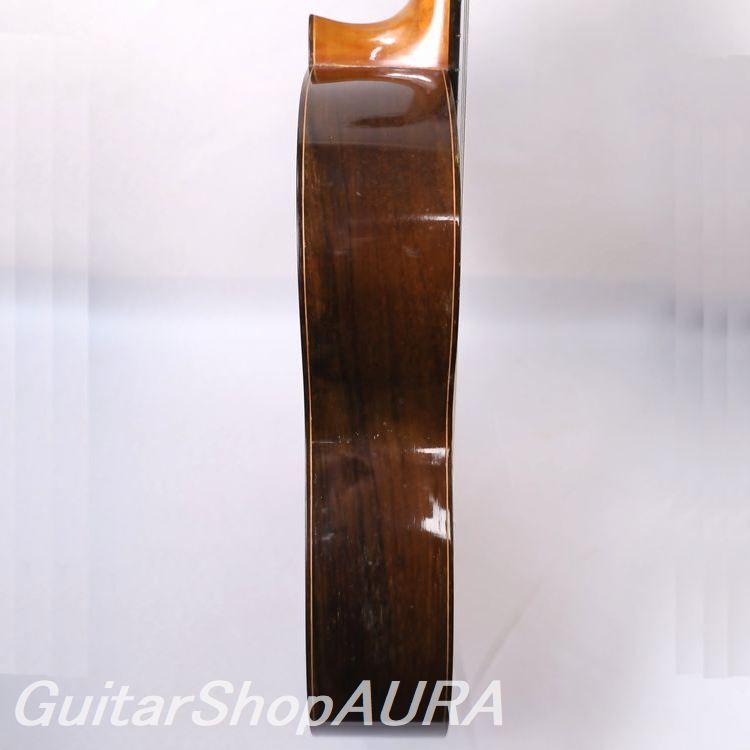
| Side&Back | Solid South American Rosewood |
| Condition※ | 7 |
| List price | INQUIRE |
| Price (tax included) | Please Inquire |
| option | with Lightweight Semi Hardcase |
Click to enlarge the photos below
|
|
 |
 |
 |
 |
 |
 |
 |
 |
 |


Neck:Mahogany
Fingerboard:Ebony
Finish(Top):Shellac
Finish(Back & Sides):Shellac
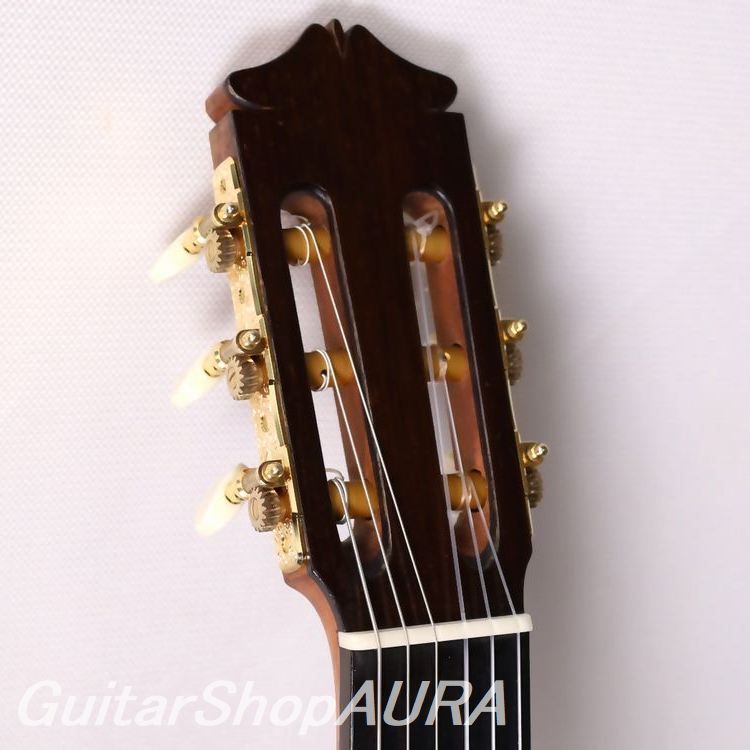
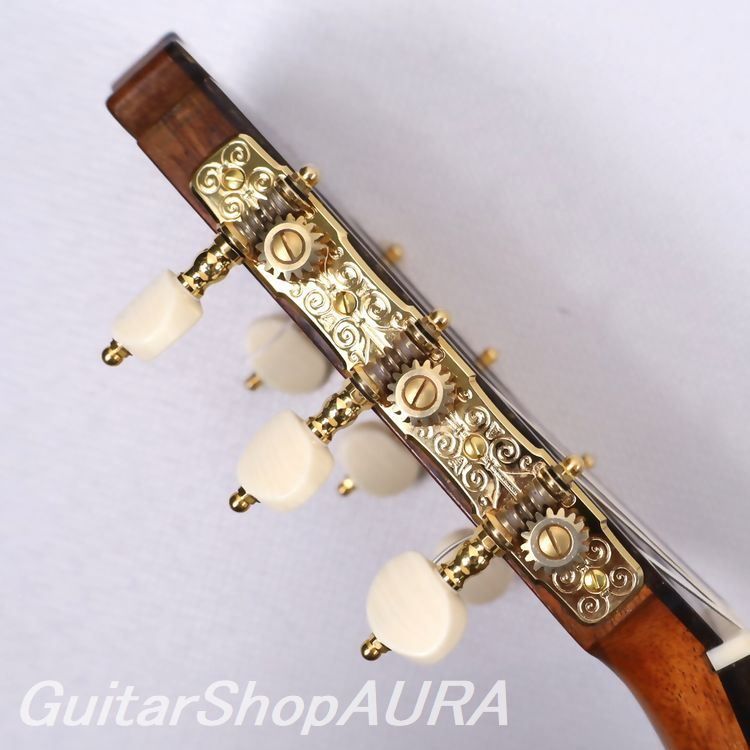
Tuning Machines:GOTOH
String Height(1st):2.6mm
String Height(6th):3.6mm
【A Legacy Completed, A Voice Reborn】
[Luthier]
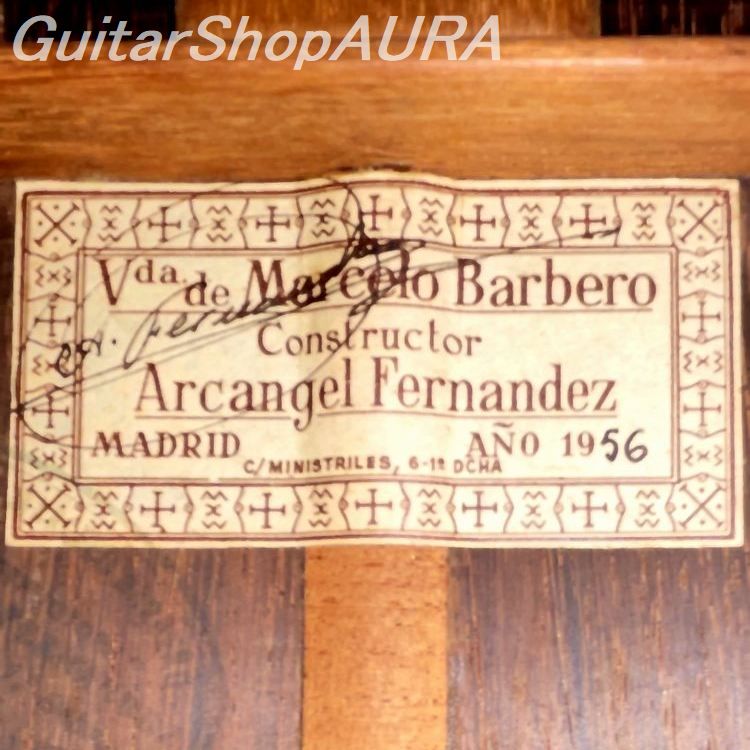
Viuda de Marcelo Barbero (Arcangel Fernandez)
Marcelo Barbero I (1904–1956), one of the foremost figures in 20th-century Spanish guitar making, left several instruments unfinished at the time of his untimely death. These were later completed by his apprentice, Arcangel Fernandez (b. 1932), and released under the label “Viuda de Marcelo Barbero,” following a traditional Spanish convention for posthumous works. In total, eight guitars were produced, all completed by Arcangel using Barbero’s original materials and designs.
Born in Madrid, Barbero began his career in the late 1920s at the workshop of José Ramírez II. His artistic and acoustic vision was profoundly shaped by the legacy of Santos Hernández. After Hernández’s passing, Barbero was entrusted with completing his unfinished instruments—an experience that deeply informed his own craftsmanship. From the late 1940s until his death, he refined a highly sophisticated style, regarded as one of the culminating achievements of the Madrid school.
Arcangel Fernandez joined Barbero in 1954 and, despite only a brief apprenticeship, completed the remaining instruments with remarkable mastery. He later established his own workshop in Madrid, continuing this important lineage alongside Barbero’s son, Marcelo Barbero Jr.
[Instrument]
1956 Viuda de Marcelo Barbero (Arcangel Fernandez), Classical Model
This guitar is one of only three classical models among the eight instruments completed after Barbero’s death (the remaining five being flamenco). According to Arcangel, it was built shortly after Barbero’s passing using only the materials and parts left in the workshop.
The instrument faithfully follows Barbero’s original design in every aspect—from body shape and rosette to headstock and internal construction—reflecting his preference for tonewoods chosen for their acoustic properties rather than visual appearance. At the same time, it reveals the early formation of Arcangel’s own style, making it a rare and historically significant collaboration between master and apprentice.
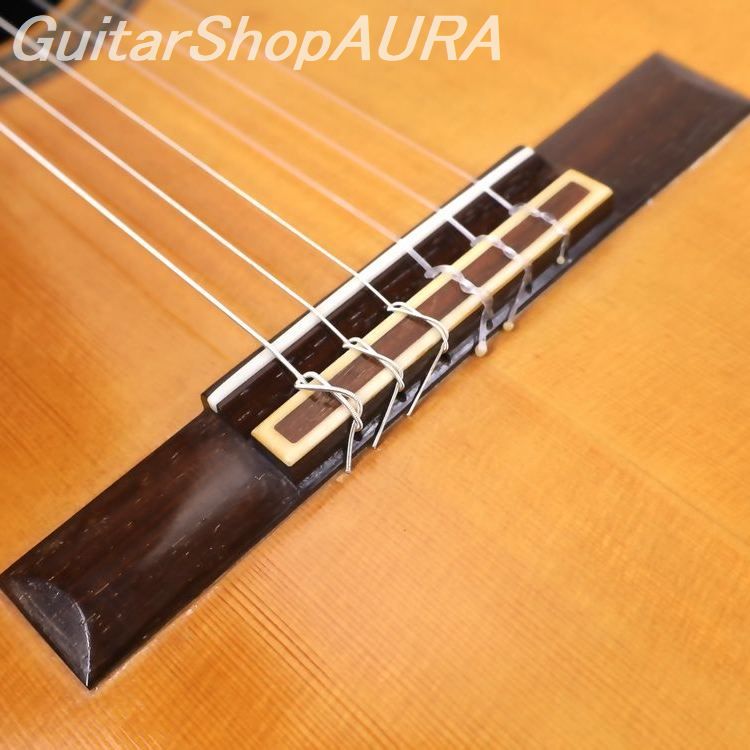
The bracing system is both simple and distinctive: a harmonic bar above and below the soundhole, a thin reinforcing plate around the rosette, and five symmetrical fan braces arranged closely along the center of the soundboard. Two closing bars in the lower bout are set in a slightly inverted V configuration, positioned further outward near the sides. A reinforced plate is fitted beneath the bridge area. The overall resonance is set slightly below F#.
This design, rooted in pre-Torres traditions and refined by Santos Hernández, was further developed by Barbero into a highly efficient acoustic system. The energy of the plucked string is concentrated at the bridge, then compressed and amplified through the stiff spruce top and robust bracing, producing a powerful yet controlled response. Notably, it achieves an exceptional balance—remarkable rigidity without sacrificing flexibility.
Arcangel clearly understood and preserved this concept in the present instrument. While it does not yet exhibit the more austere resistance of his later work, it offers vivid responsiveness, strong projection, and a warm, woody tonal character—likely enhanced by decades of playing.
[Condition]
For an instrument of nearly 70 years, the condition is very good. There are no cracks. The top shows visible playing wear, particularly around the fingerboard and soundhole, though none are severe. The back and sides, made of dark, straight-grained Central/South American rosewood typical of Barbero’s preference, show only minor surface wear and slight finish clouding.
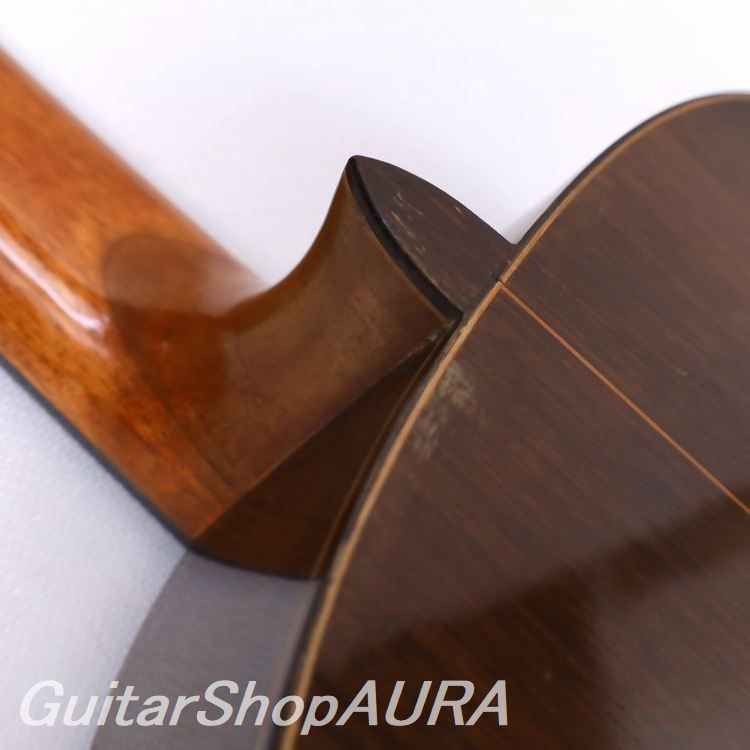
The neck has likely been refinished in the past and remains in excellent condition. It is straight, and while the frets show moderate wear (especially in the lower positions), playability is unaffected. The neck has a medium D-shaped profile.
The tuning machines have been replaced with Gotoh units and function well. The label bears Arcangel Fernandez’s stamp, with additional stamps inside the guitar. A stamped number “19” is present on the heel, though its meaning remains unknown.