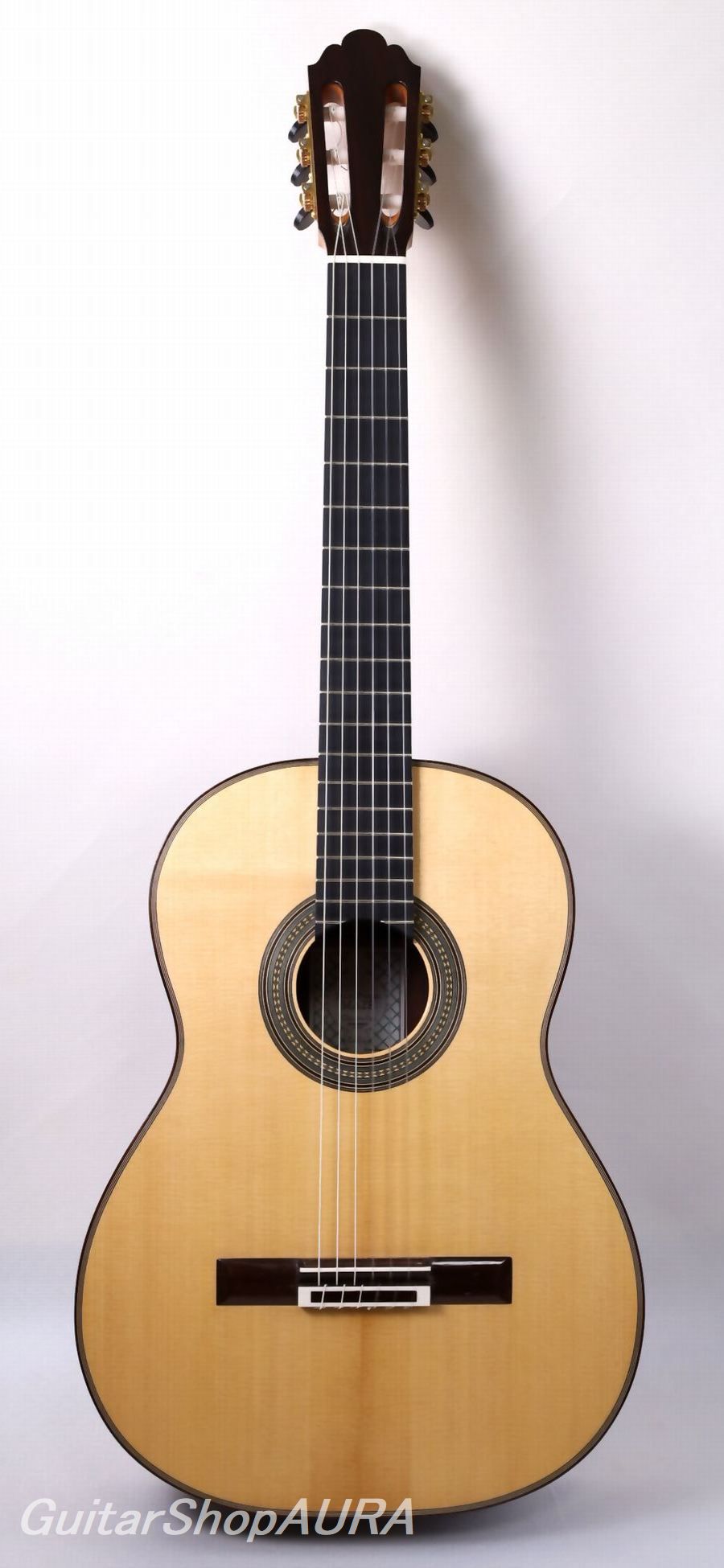
| Instrument | Jean Pierre Maze |
| Category | Imported Classical Guitars 〔New〕 |
| Number/Model | No.60 |
| Scale length | 650mm |
| Country | France |
| Year | 2024Year |
| Top | Solid Spruce |
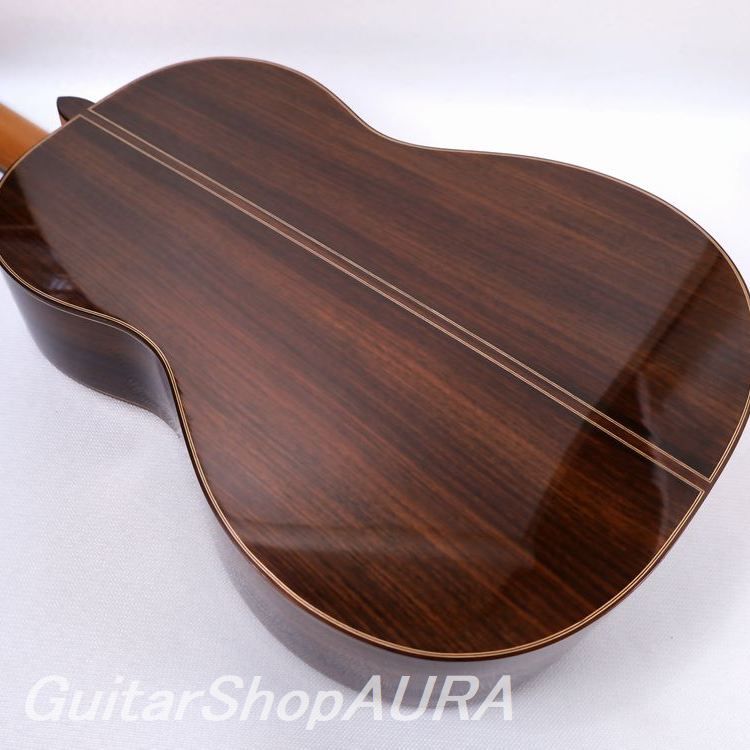
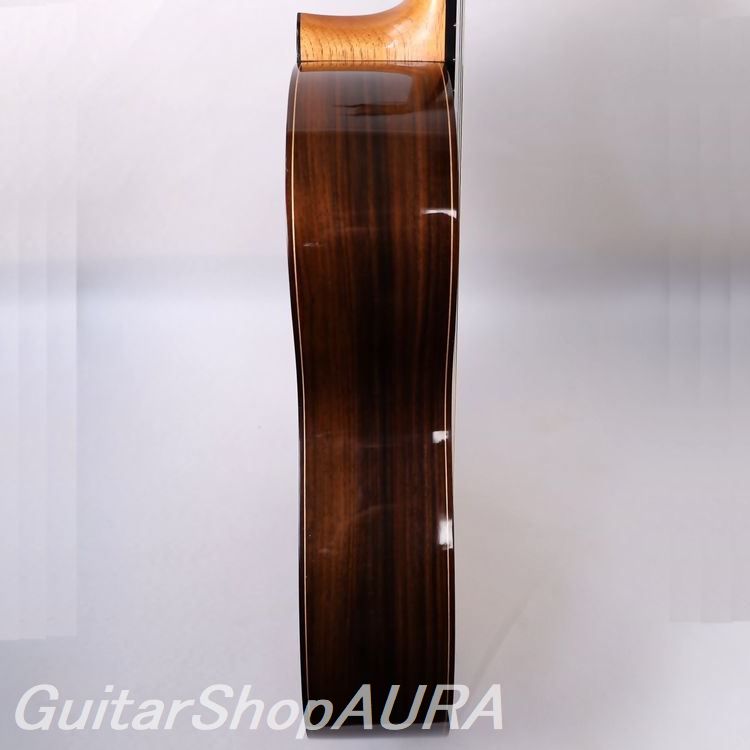
| Side&Back | Solid Indian Rosewood |
| Condition※ | 10 |
| List price | INQUIRE |
| Price (tax included) | Please Inquire |
| option | with BAM case |
Click to enlarge the photos below
|
|
 |
 |
 |
 |
 |
 |
 |
 |
 |



Setup Service
Customers who purchase a new handmade instrument are entitled to one complimentary string-height adjustment, performed by our shop, with no expiration date.
This service applies only to adjustments of the original nut and saddle installed at the time of purchase.
New fabrication of parts will incur an additional charge.
If neck relief adjustment is required, a separate adjustment fee will apply.
Specifications
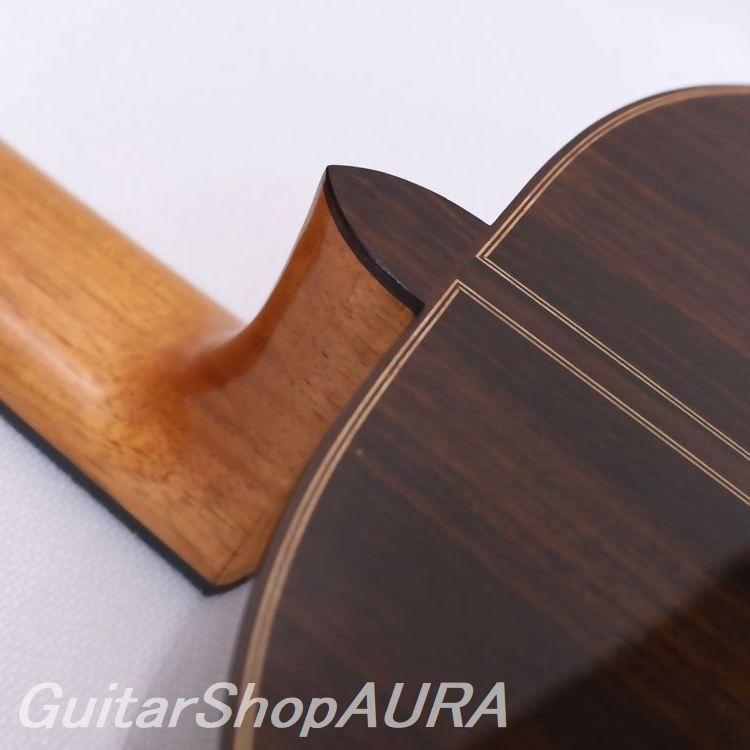
Neck: Cedro
Fingerboard: Ebony
Finish (Top): Shellac
Finish (Back & Sides): Shellac
Tuning Machines: Sloane
String Height (12th fret):
1st string: 3.0 mm
6th string: 3.9 mm
Luthier Information
Jean-Pierre Mazé
Born in 1951 in Saint-Pol-de-Léon, Brittany, France. From a young age, Mazé was interested in the guitar both as a player and as a maker, though he did not initially pursue it as a profession. In 1976, he joined the French Ministry of Finance in Paris. While working as a civil servant, he met Robert Bouchet (1898–1986), who was living in Montmartre at the time, and began studying guitar making under him in 1979.
Bouchet, one of the most important French luthiers, provided Mazé with meticulous guidance ranging from jig construction to the aesthetic principles essential to guitar making. This mentorship continued until Bouchet’s death in 1986. Mazé completed his first guitar in 1983, but Bouchet advised him to remain an “amateur,” building freely and without pressure. Following this advice, Mazé continued his career as a civil servant while producing guitars steadily at a pace of approximately one instrument per year.
Mazé maintained close ties with Japanese musicians, including the late Minoru Inagaki. One of his early instruments (No. 5) was acquired and introduced by a Japanese dealer, making Japan likely the first market in which the name Jean-Pierre Mazé gained strong recognition as a brand.
Despite being described as an “amateur,” the exceptional level of completion of his instruments, his extremely limited output, and his long-standing mentor–disciple relationship with Bouchet led him to be regarded—particularly in Japan—as Bouchet’s sole successor. When Bouchet passed away in 1986, Mazé completed his teacher’s unfinished final instrument and was entrusted by Bouchet’s widow with all of Bouchet’s personal tools and tonewood.
After continuing his civil service career for many years while maintaining a one-guitar-per-year output, Mazé retired several years ago and now devotes himself fully to luthiery, producing approximately two to three guitars annually. His instruments are now in growing demand and increasingly recognized not only in Japan but worldwide.
Instrument Information
Jean-Pierre Mazé
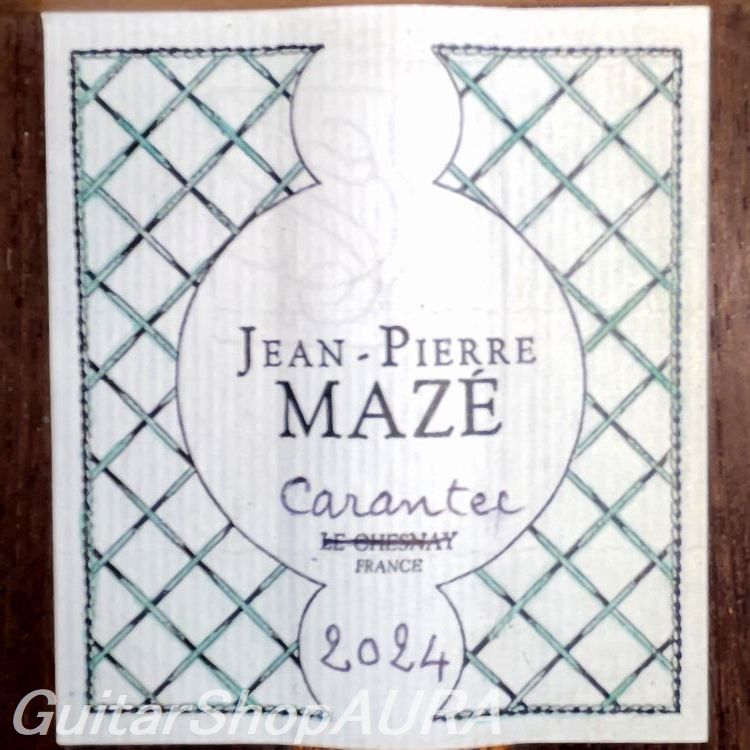
2024, No. 60 — New instrument.
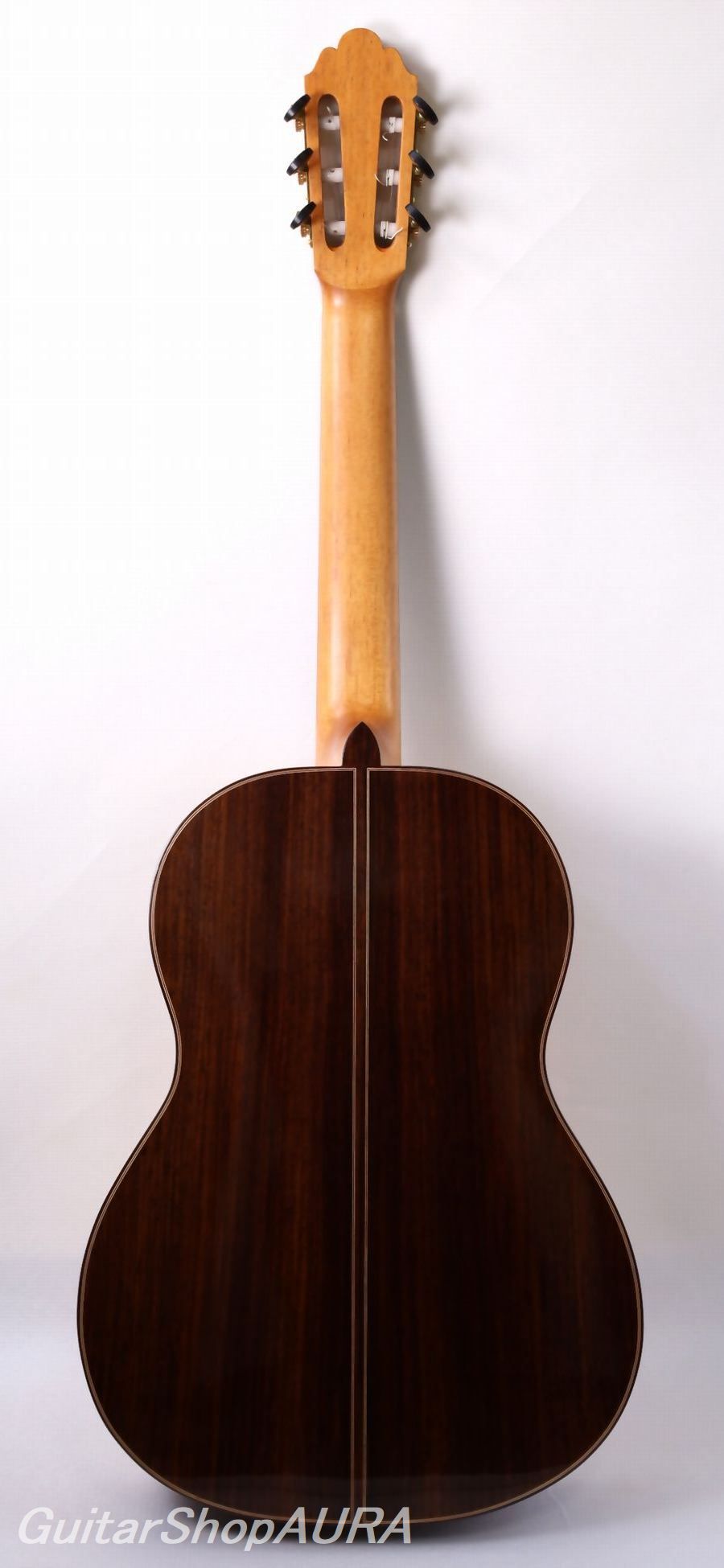
The soundboard is spruce, with Indian rosewood back and sides—Mazé’s standard specification in recent years (until the early 2000s, he used Central and South American rosewood for the back and sides). Structurally and acoustically, the influence of Robert Bouchet is unmistakable. However, Mazé absorbs Bouchet’s philosophy deeply and flexibly, blending it naturally with his own personality without excessive assertion. This integration results in a tonal and structural identity distinct from other Bouchet followers.
While makers of similar lineage—such as Daniel Friederich or Dominique Field—established strong individual identities through more overt reinterpretations (Friederich’s bold application of acoustic engineering, Field’s reference to Fleta-like structural strength), Mazé’s approach feels more intimate and understated, as if shaped through close personal conversation. This sense of closeness, combined with a refined French sensibility, is what makes his instruments truly unique.
The soundboard bracing follows Bouchet’s later design: seven fan braces combined with a transverse bar placed almost across the full width at the bridge plate position. However, the lowest bass-side fan brace stops at the transverse bar instead of passing through it. Each of the seven fan braces differs in height, width, and cross-sectional shape—some semicircular, others peaked—demonstrating Mazé’s individual refinements.
A key difference from Bouchet lies in the intersection design between the fan braces and the transverse bar. Whereas Bouchet joined the braces and bar seamlessly, Mazé cuts openings in the transverse bar precisely matched to the brace dimensions, allowing the braces to pass through in a tunnel-like structure.
Above the soundhole (neck side), two harmonic bars are installed, with triangular reinforcement plates placed between the bars and between the upper bar and the neck foot. These plates trace a shape similar to the spread of the seven fan braces. Below the soundhole (bridge side), a harmonic bar with two openings—one on the treble side and one on the bass side (approximately 3 mm high and 4.5 cm long)—allows four of the seven fan braces (two on each side, closest to the back) to extend through to the edge of the soundhole.
The main air resonance is set slightly below G♯ (Bouchet typically set it at A).
The attack is slightly forward-leaning, as if the sound emerges from deep in the throat before reaching the lips—an unmistakably French character. Notes connect naturally with a subtle viscosity, while the low-mid to bass range has a soft, enveloping resonance. The sound image combines restraint in color with refined richness and gloss, resulting in a delicate yet powerful presence.
Expressively, the instrument carries a gentle romanticism tinged with shadow, an unpretentious intellectual quality, and occasional charm. This natural emergence of complex emotional nuance is one of the defining traits of Mazé’s work. Functionally, the guitar offers high linearity in response for both hands, producing sound almost directly in proportion to finger movement.
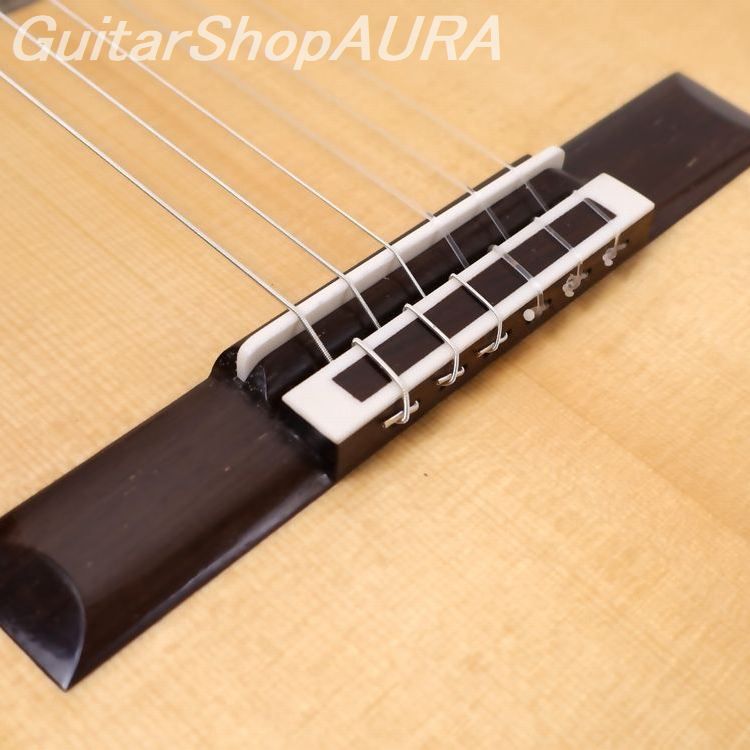
The instrument is finished entirely in shellac. The neck has a slightly slim D-shaped profile. String height at the 12th fret is set at 3.0 mm (1st string) and 3.9 mm (6th string), with 2.0–3.0 mm of saddle remaining, allowing for further lowering if desired. The bridge features double string holes (standard tying is also possible).
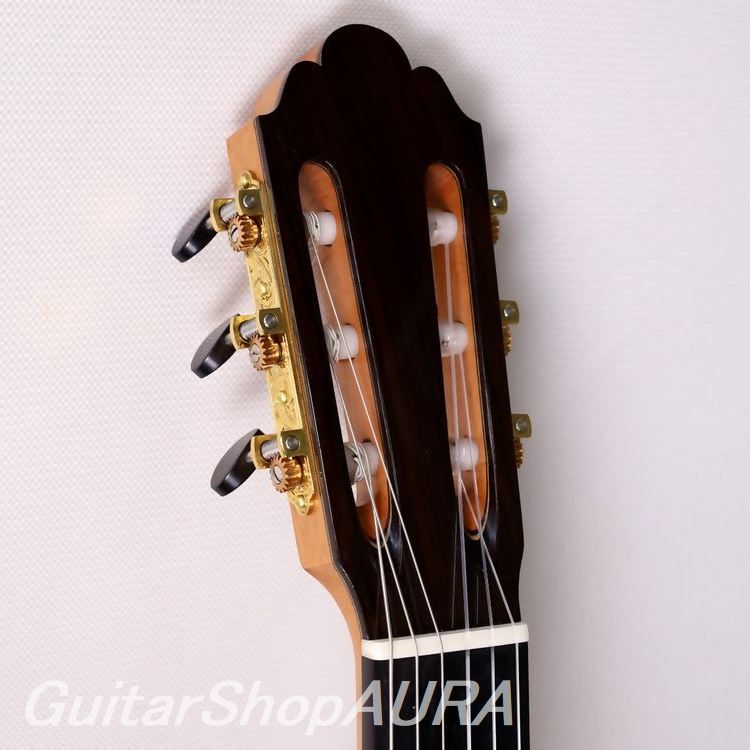
The tuning machines are Sloane units with leaf-pattern plates. Weight: 1.69 kg.
This guitar was personally delivered to our shop by Mr. Mazé himself. It includes a BAM case, which he had been using privately to transport this instrument.