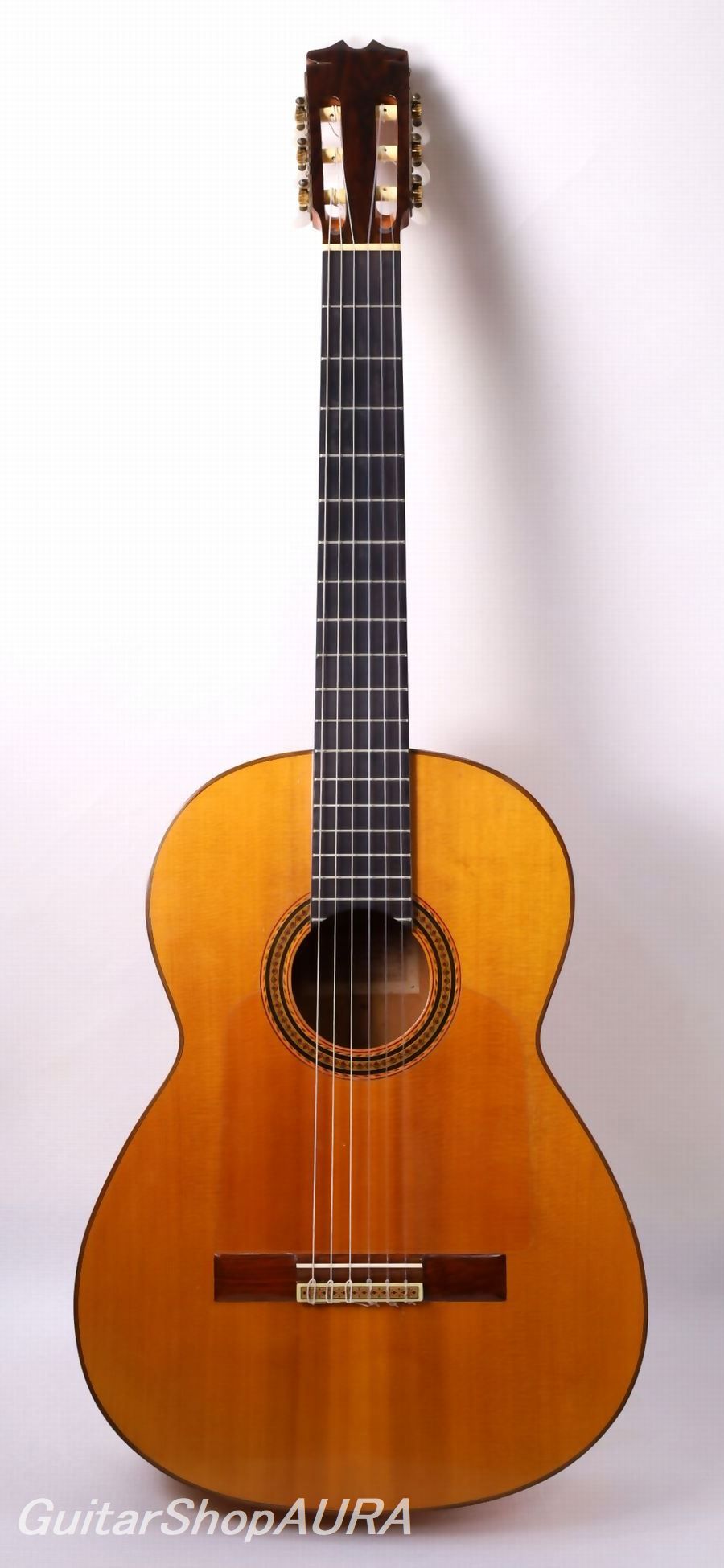
| Instrument | Sobrinos de Domingo Esteso |
| Category | Imported Flamenco Guitars 〔Vintage〕 |
| Number/Model | Flamenco Blanca |
| Scale length | 655mm |
| Country | Spain |
| Year | 1973Year |
| Top | Solid spruce |
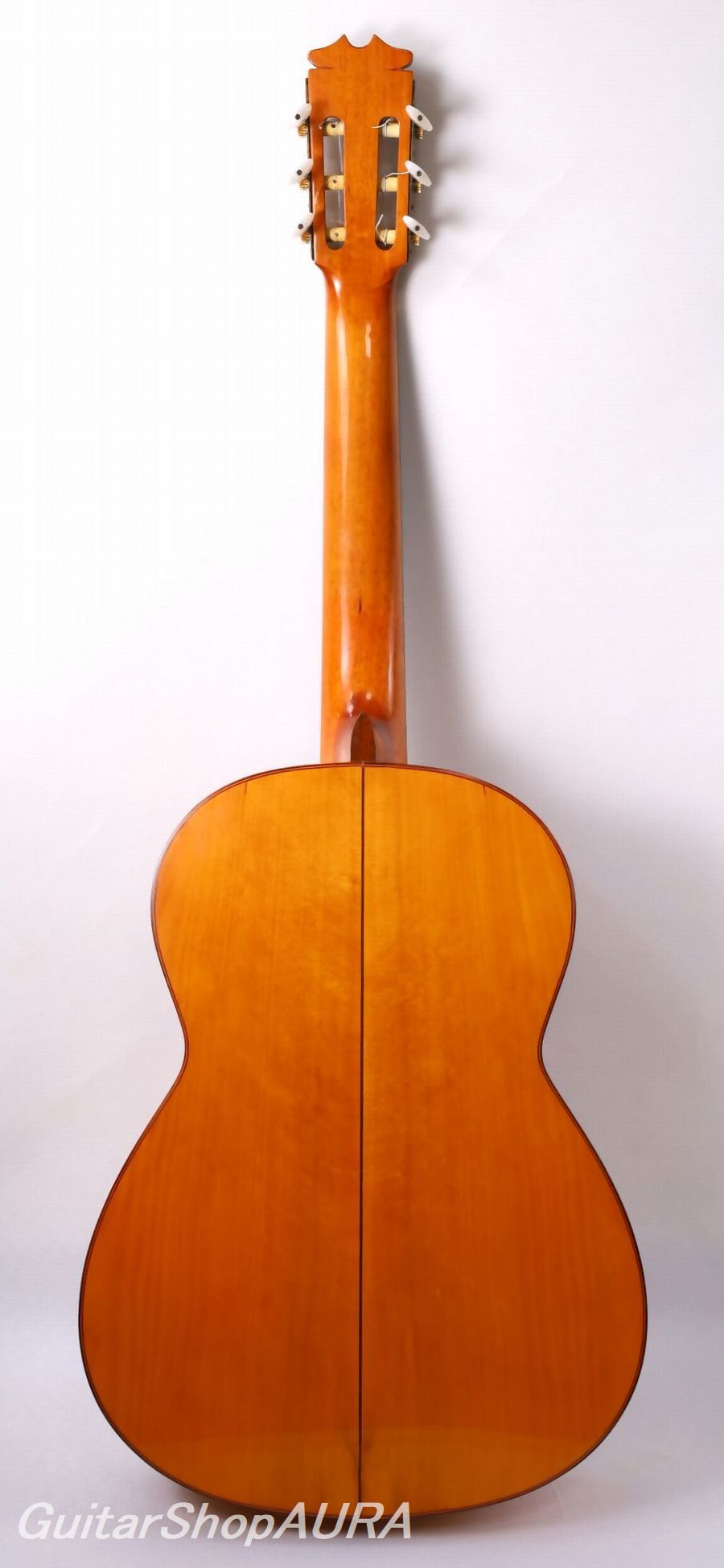
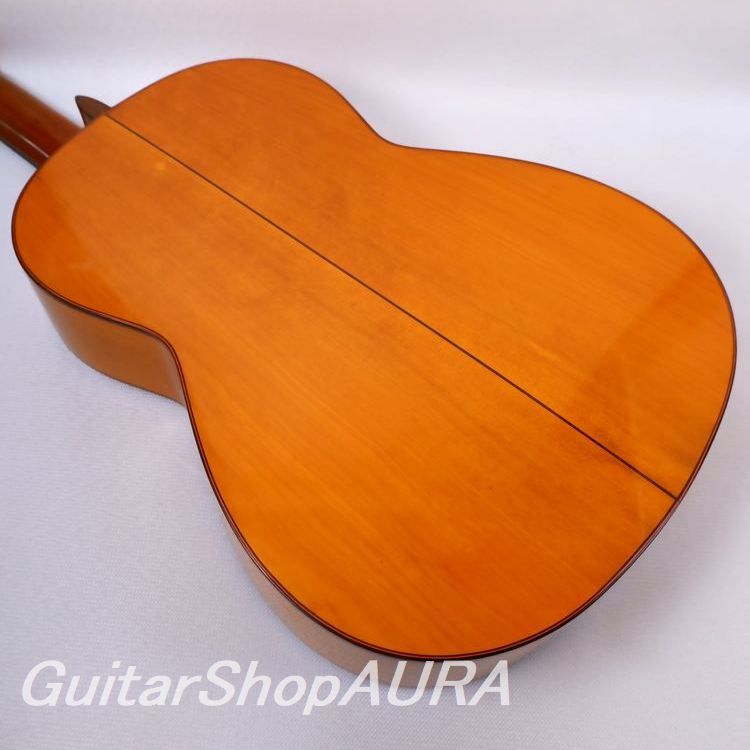
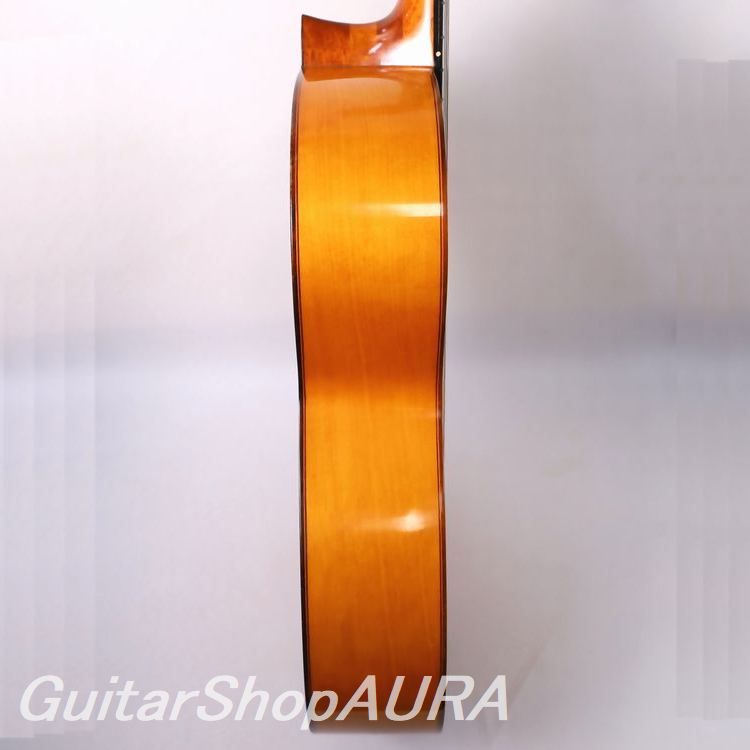
| Side&Back | Solid Cypress |
| Condition※ | 7 |
| List price | INQUIRE |
| Price (tax included) | Please Inquire |
| option | with Light form case |
Click to enlarge the photos below
|
|
 |
 |
 |
 |
 |
 |
 |
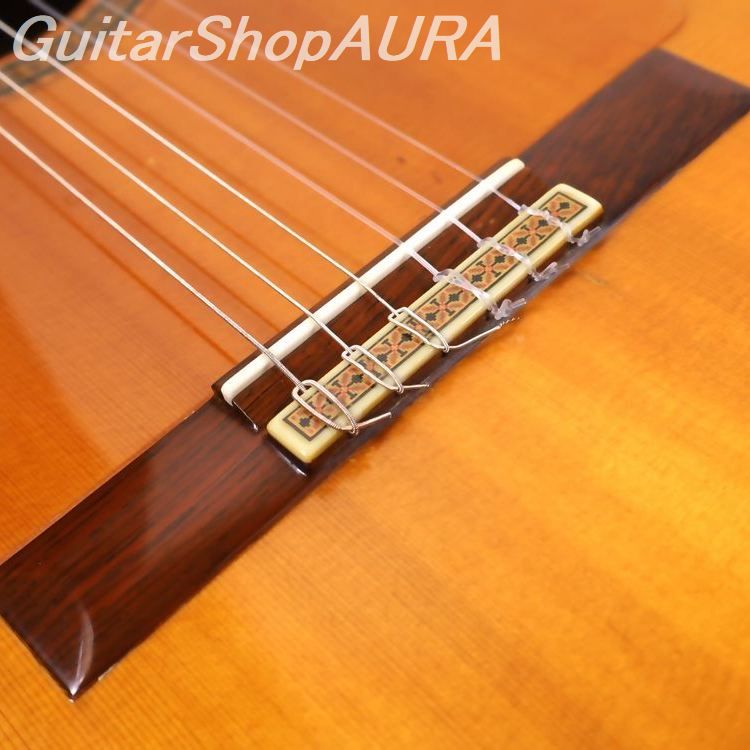 |
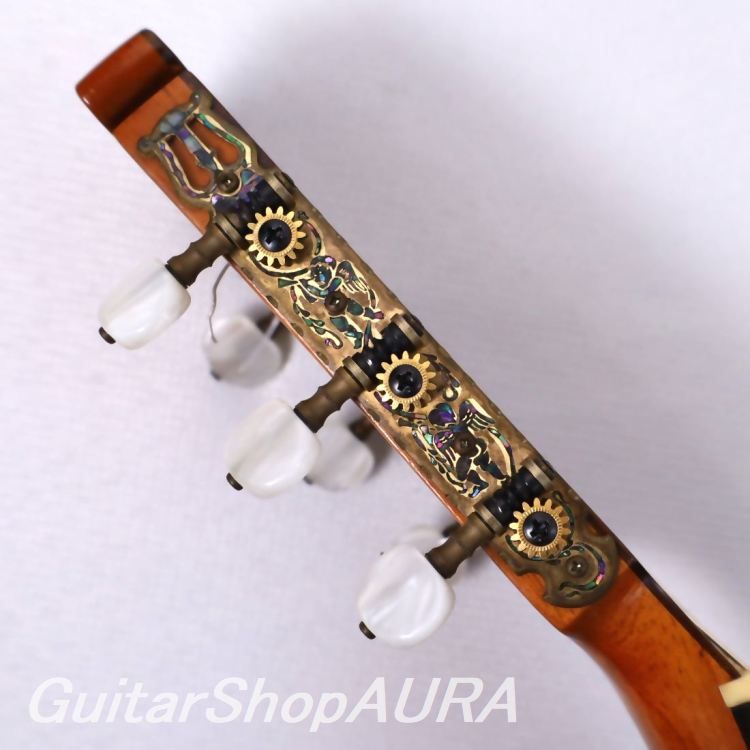 |
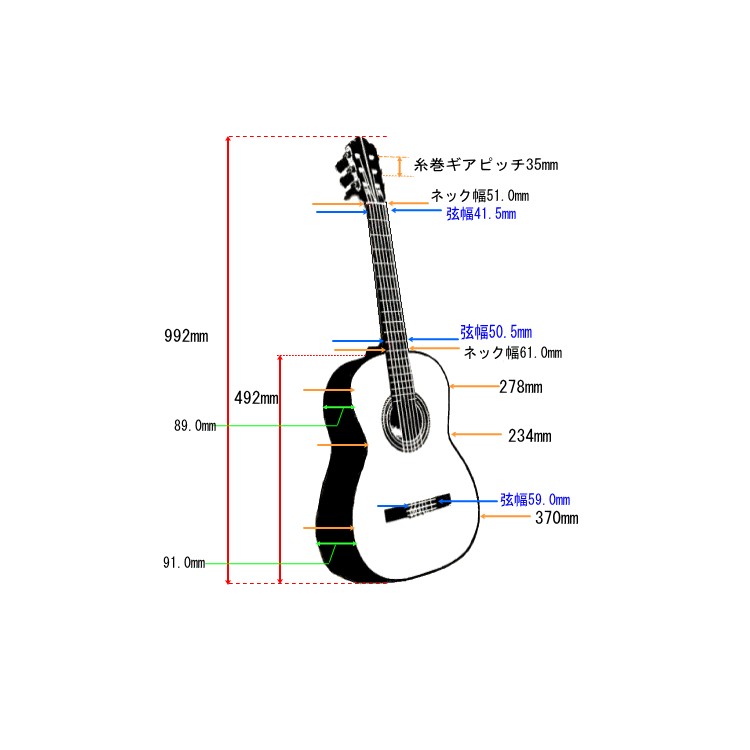


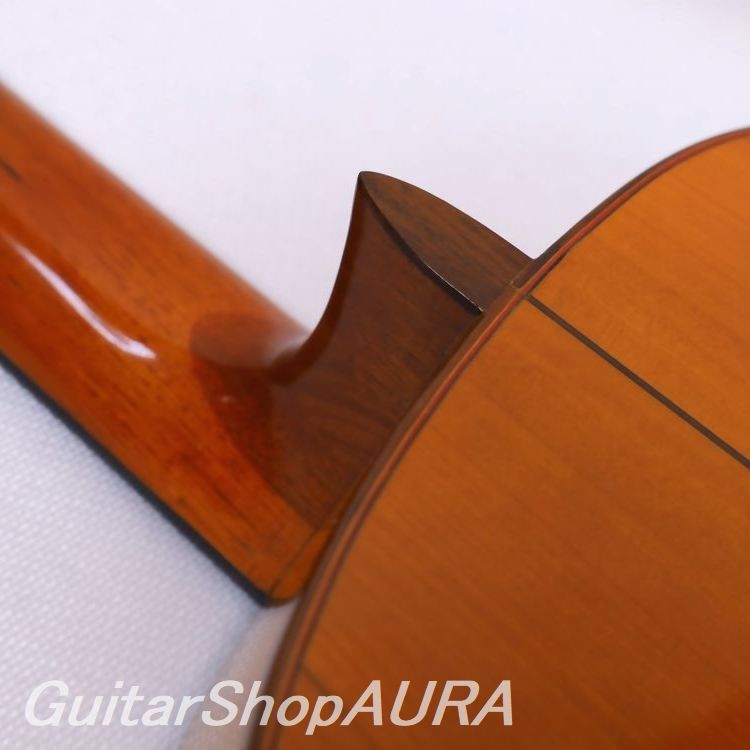
Neck:Cedro
Fingerboard:Ebony
Finish(Top):Polyurethan
Finish(Back & Sides):Polyurethan
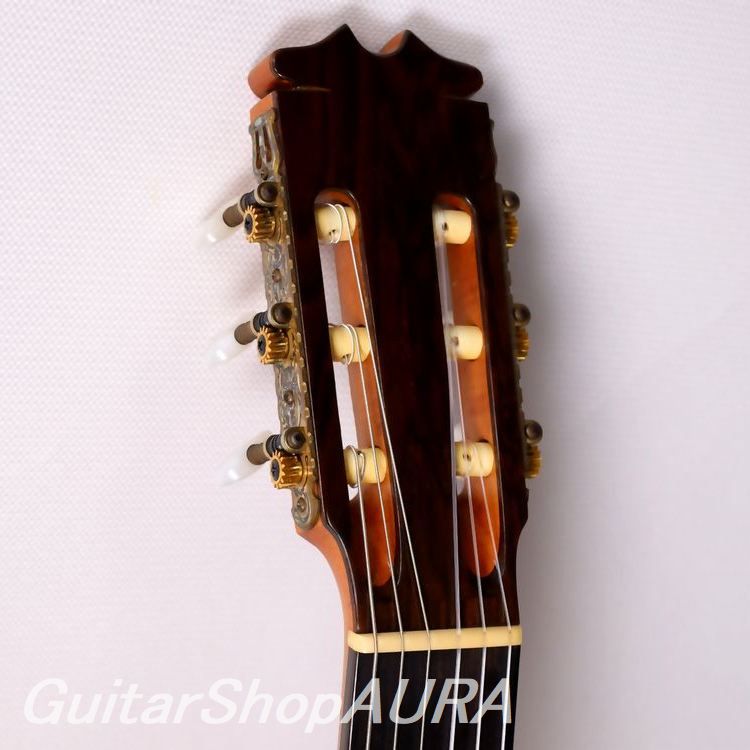
Tuning Machines:GOTOH
String Height(1st):2.7mm
String Height(6th):2.6mm
Maker Information
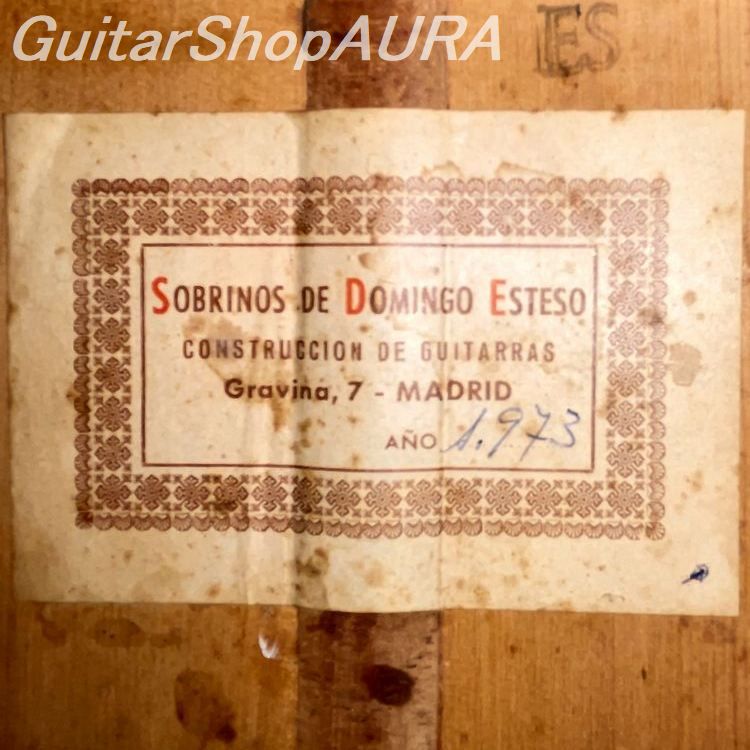
Sobrinos de Domingo Esteso was the original name of the legendary Spanish flamenco guitar brand later known as Conde Hermanos, one of the most influential makers in the second half of the 20th century. The label reading 'Sobrinos de Domingo Esteso' ('Nephews of the late Domingo Esteso') reflects the succession of the Gravina 7 workshop in Madrid following the death of master luthier Domingo Esteso (1882–1937). The workshop was inherited by his three nephews—Faustino Conde (1913–1988), Mariano Conde (1916–1989), and Julio Conde (1918–1995)—who continued the family tradition.
Domingo Esteso had established himself as one of Madrid's foremost luthiers after working alongside Santos Hernández under Manuel Ramírez, opening his own workshop at Gravina 7 in 1919. His guitars are admired for their natural authenticity, warm yet powerful voice, and expressive lyrical character. Even today, they remain highly regarded as exceptional concert instruments.
Immediately after Esteso's passing, guitars were labeled 'Viuda y Sobrinos de Domingo Esteso' ('Widow and Nephews of Domingo Esteso'), reflecting the involvement of Esteso's widow, Nicolasa Salamanca, together with the Conde brothers. This label remained in use until Nicolasa's death in 1959.
During the 1960s and early 1970s, the workshop adopted the 'Sobrinos de Domingo Esteso' label. This transitional period bridged the traditional Esteso aesthetic with the innovations that would later define the Conde Hermanos brand. While preserving the warmth and authenticity of earlier Madrid guitars, the makers refined their construction, tonal concept, and visual identity. These instruments offer outstanding flamenco performance while retaining a distinctly old-school Spanish character.
As the workshop evolved into Conde Hermanos, the guitars gradually adopted the now-iconic visual features—including the distinctive 'bull-horn' headstock and reddish lacquer finish—while developing a brighter, more focused, and more aggressive tonal character. By contrast, instruments from the Sobrinos period combine traditional Spanish warmth with the emerging aesthetics of Faustino Conde, resulting in guitars of remarkable individuality and musicality.
Because this era was one of continual experimentation, guitars from the period vary considerably in construction, labels, and tonal character. Some even feature both 'Sobrinos de Domingo Esteso' and 'Conde Hermanos' on the label. Although they lack the strict consistency of later models such as the A26, these unique characteristics make them highly desirable among collectors and vintage flamenco enthusiasts today.
Instrument Information
This is a 1973 Sobrinos de Domingo Esteso Flamenco Blanca, offered in excellent used condition.
It possesses every quality expected of a fine traditional flamenco guitar: crisp attack, strong projection, excellent note separation, and the characteristic elasticity and immediacy essential to authentic flamenco playing. At the same time, it delivers a reassuring sense of balance that distinguishes it from the uncompromising brightness and hardness often associated with later Conde Hermanos models such as the A26.
While retaining the sharp response demanded by flamenco, the tonal character is rounded and naturally woody, combining clarity with warmth. The sound is never excessively bright; instead, it offers subtle nuance and expressive depth, allowing both lyrical passages and rhythmic accompaniment to emerge with remarkable musicality. This appealing balance makes the instrument equally attractive to players who appreciate the classic Madrid school and to admirers of the Conde tradition.
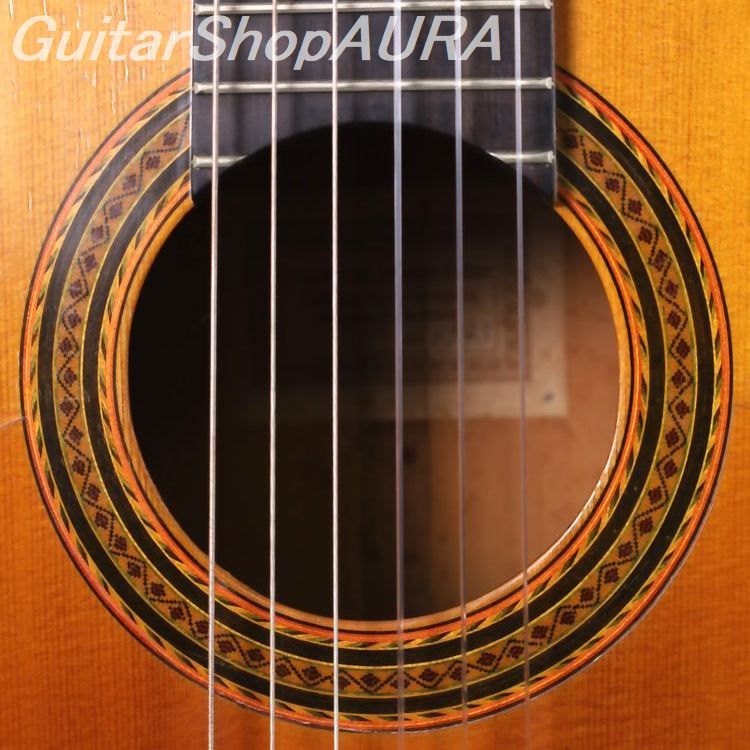
The soundboard features a highly traditional bracing pattern: one reinforcing plate and one harmonic bar above the soundhole, one harmonic bar below it, and reinforcing plates on both sides of the soundhole. The fan bracing consists of seven symmetrical braces, terminated by two V-shaped closing bars near the lower bout. The main body resonance is tuned slightly above F#.
Considering that the guitar is now over fifty years old, it remains in remarkably well-preserved condition. There are no repaired cracks. The fingerboard was professionally converted to a double fingerboard many years ago, with a complete refret performed at the same time, and both the neck geometry and current setup are excellent. The neck has a comfortable, slim D-shaped profile. String action measures 2.2 mm on both the 1st and 6th strings at the 12th fret, with approximately 1.5 mm of saddle remaining, providing an ideal flamenco setup.
Cosmetically, the guitar shows concentrated playing wear around both sides of the fingerboard extension and near the soundhole, particularly around the edges of the golpeador, while the remainder of the instrument exhibits only light signs of normal use. The back, sides, and rear of the neck display minor surface wear consistent with careful long-term ownership and remain in very clean condition overall.
The original tuning machines have been replaced with Gotoh tuners, which function smoothly and reliably.