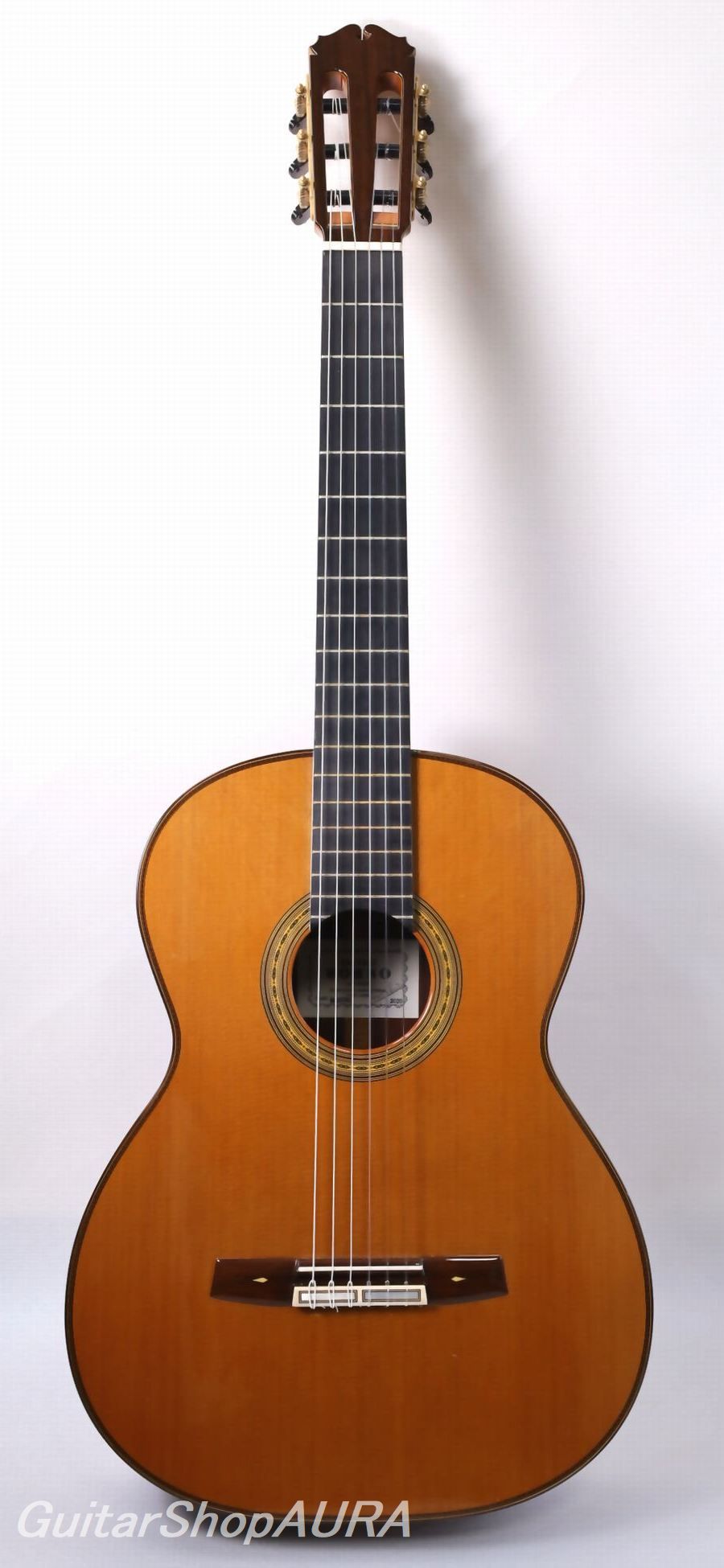
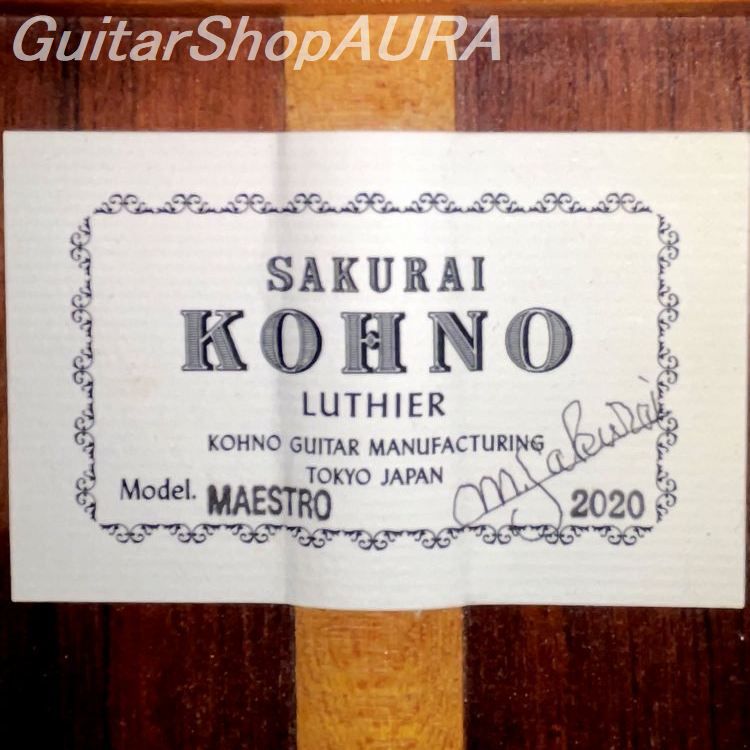
| Instrument | Sakurai Kohno |
| Category | Japanese Classical Guitars 〔Used〕 |
| Number/Model | model Maestro K 0121 A |
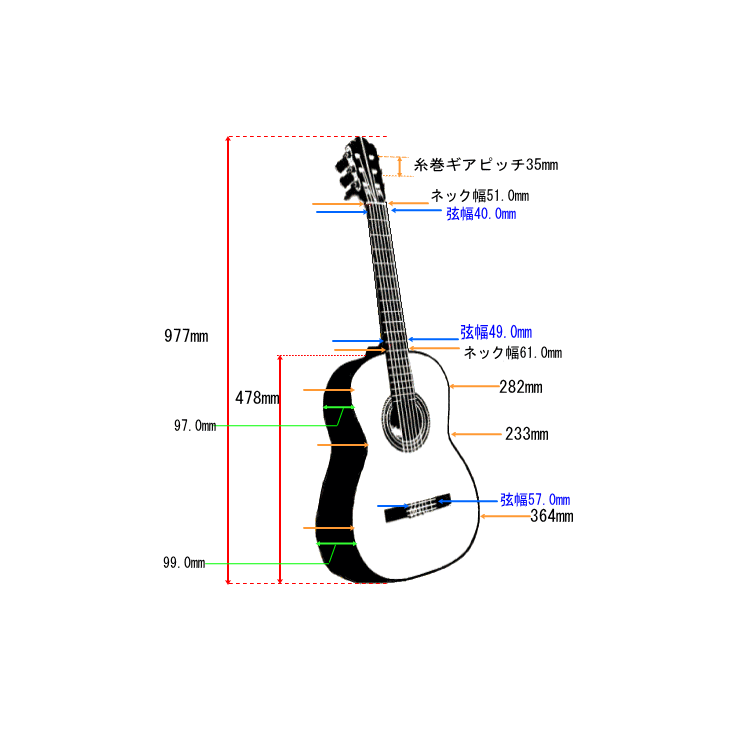
| Scale length | 640mm |
| Country | Japan |
| Year | 2020Year |
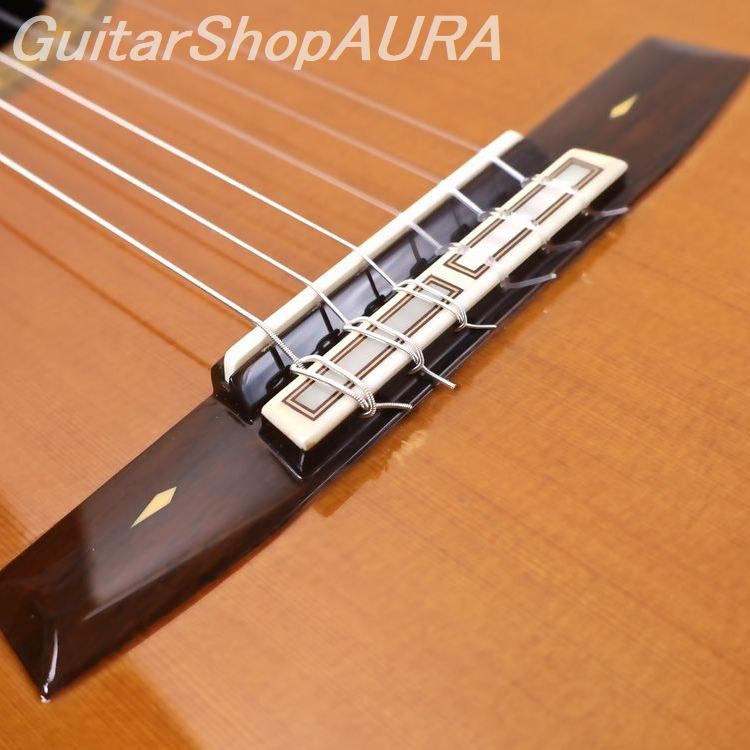
| Top | Solid Ceder |
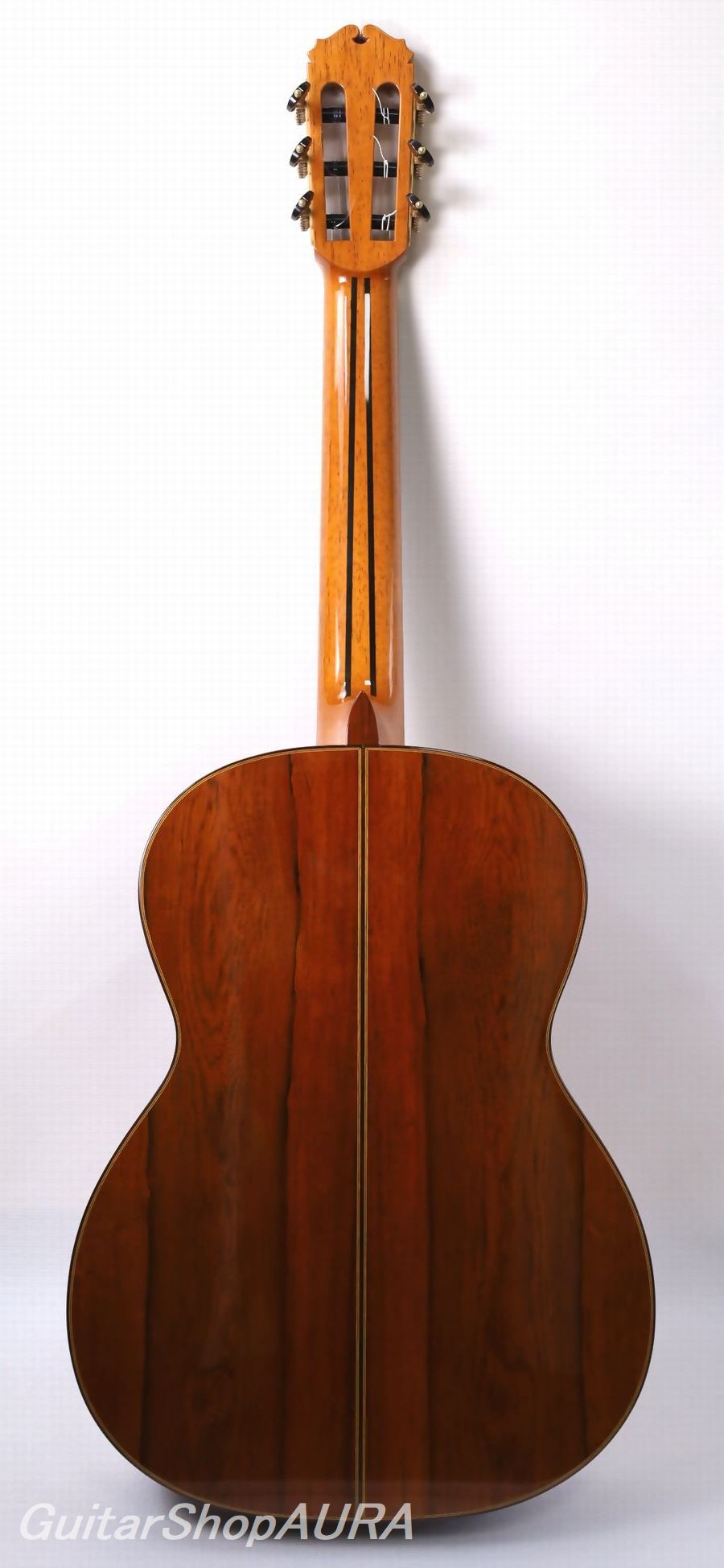
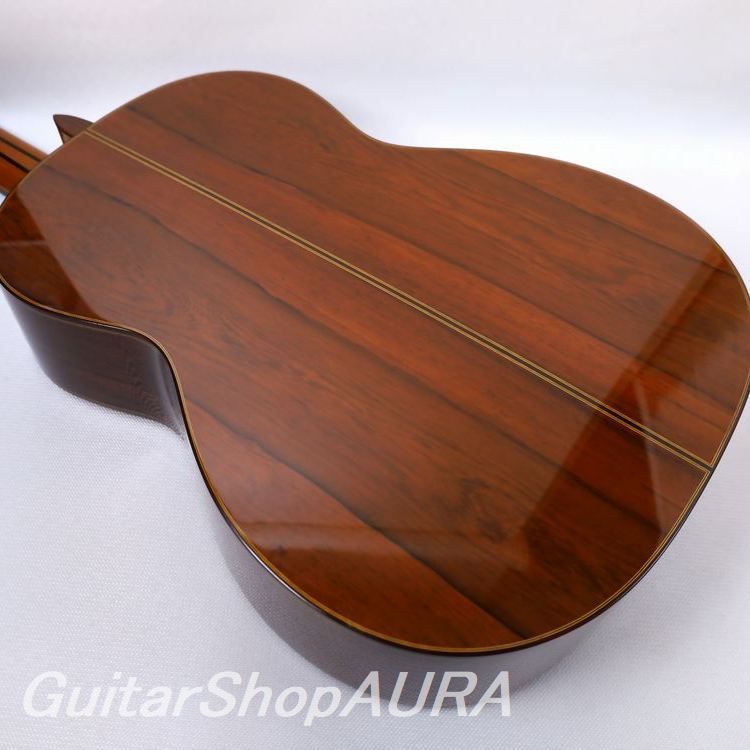
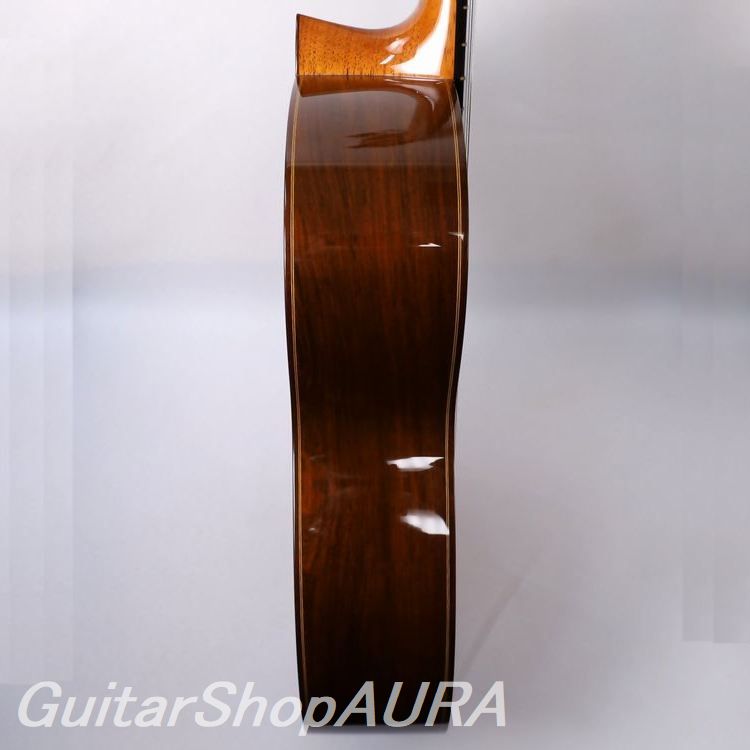
| Side&Back | Solid South American Rosewood |
| Condition※ | 7 |
| List price | INQUIRE |
| Price (tax included) | Please Inquire |
| option | with Hardcase |
Click to enlarge the photos below
|
|
 |
 |
 |
 |
 |
 |
 |
 |
 |


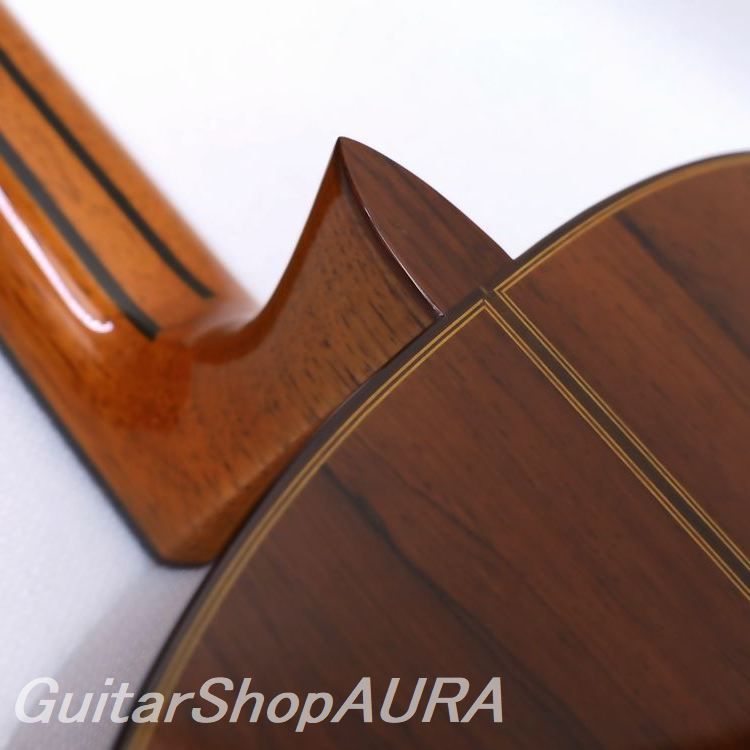
Neck:Cedro
Fingerboard:Ebony
Finish(Top):Cashew
Finish(Back & Sides):Cashew
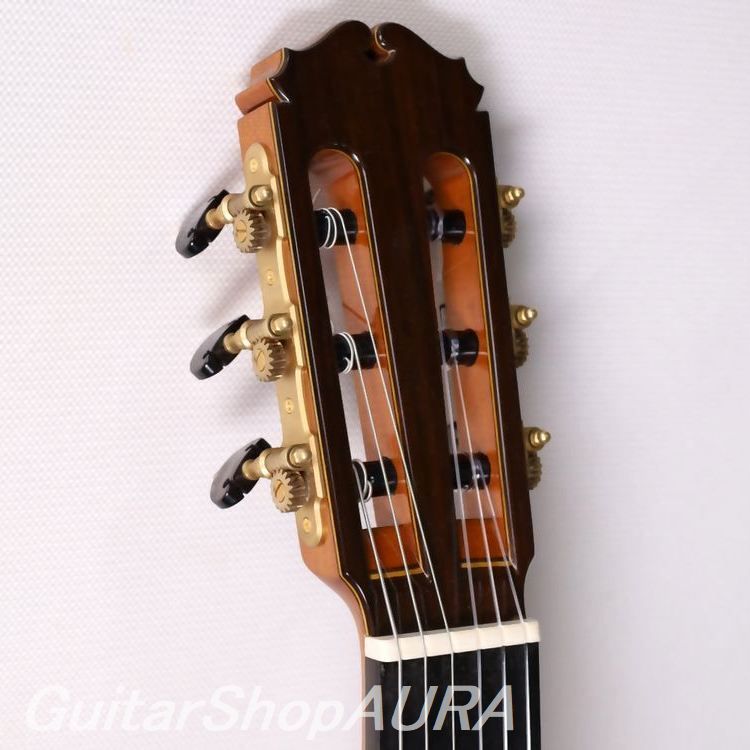
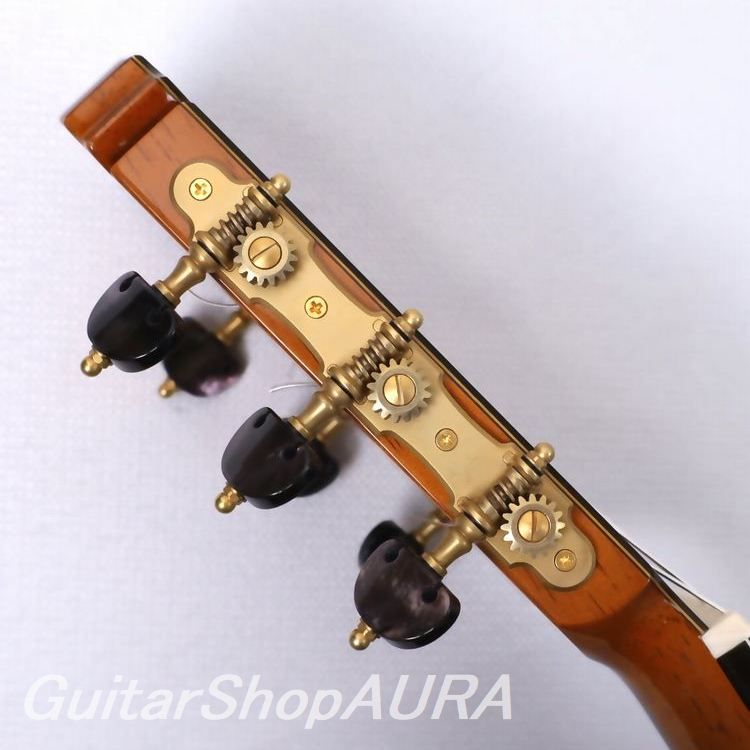
Tuning Machines:GOTOH
String Height(1st):2.5mm
String Height(6th):3.5mm
[Luthier Information]
Born in 1926 in Mito, Ibaraki Prefecture, Japan.
He began building guitars in 1948 upon graduating from the Woodcraft Department of Tokyo Higher School of Arts and Crafts (now the Department of Architecture, Chiba University). Entirely self-taught as a luthier, his very first instrument was reportedly built after carefully examining a guitar by Sakazo Nakade (though there was no direct personal relationship between them). From his earliest period, he pursued numerous structural experiments, some of which were remarkably innovative for their time.
These extensive studies and practical experiments culminated in the late 1960s in a distinctive bracing system based on square patterns aligned both horizontally and vertically with the grain of the soundboard. This concept, developed through various refinements, remains a defining feature of the brand to this day.
In 1960, he traveled to Spain, visiting the workshops of Ignacio Fleta and Arcángel Fernández, where he deepened his understanding of Spanish guitar making and incorporated those insights into his own work. In September 1967, he was awarded the Gold Medal at the Liège International Guitar Making Competition in Belgium, an achievement that brought him international recognition.
That same year, his nephew, Masaki Sakurai, joined the workshop. After his passing in 1998, Sakurai inherited the workshop and has continued the legacy under the Sakurai / Kono brand, maintaining a consistent and respected model lineup.
Widely regarded as a pioneer of high-end classical guitar making in Japan, this brand has enjoyed enduring popularity among players both past and present. By reinterpreting the essence of Spanish guitars through a uniquely Japanese perspective, these instruments achieved an unprecedented balance of tonal character, playability, and refined craftsmanship, using carefully selected tonewoods. Their success helped establish Japan as a serious presence in the world of fine classical guitar making, and today the brand continues to receive high acclaim internationally.